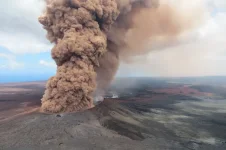
Hawaii's Kilauea volcano started shooting lava more than 1,000 feet high on Friday morning. The eruption began around 1:40 a.m. local time with hot rock fountains coming from the north opening. Scientists at the Hawaiian Volcano Observatory said the lava plume reached over 20,000 feet tall. The massive cloud contains dangerous pieces of volcanic glass called Pele's hair and rock chunks known as tephra.
Kilauea ranks as one of six active volcanoes across Hawaii alongside Mauna Loa, which holds the title as the world's biggest active volcano. This marks the 26th time Kilauea has erupted since December 2024. Observatory experts had predicted this eruption would happen between June 18 and 20 based on pressure building up inside the volcano.
The main dangers from lava fountaining come from volcanic gases like water vapor, carbon dioxide, and sulfur dioxide. These gases create volcanic haze called vog that can travel far with the wind. People living near the eruption area should limit their time outside because of the glass fragments and other particles floating around. The observatory warns that volcanic material can cause problems for anyone breathing it downwind from the eruption site.
Kilauea ranks as one of six active volcanoes across Hawaii alongside Mauna Loa, which holds the title as the world's biggest active volcano. This marks the 26th time Kilauea has erupted since December 2024. Observatory experts had predicted this eruption would happen between June 18 and 20 based on pressure building up inside the volcano.
The main dangers from lava fountaining come from volcanic gases like water vapor, carbon dioxide, and sulfur dioxide. These gases create volcanic haze called vog that can travel far with the wind. People living near the eruption area should limit their time outside because of the glass fragments and other particles floating around. The observatory warns that volcanic material can cause problems for anyone breathing it downwind from the eruption site.