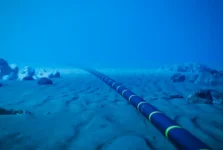
The African Telecommunications Union and African Subsea Ecosystem Forum ran a workshop for 240 people from 42 countries about how Africa depends on underwater fiber cables that keep breaking. Secretary General John Omo said the cables carry up to 99 percent of international data traffic, and outages last year in March knocked out service for over a dozen countries when multiple Atlantic systems failed at once. Most of the 150 to 200 annual cable faults happen in shallow water under 100 meters, where fishing boats and anchors cause accidental damage.
Speakers pointed out that Singapore treats subsea cables like critical infrastructure with strict no-anchor zones, while Malaysia dropped cabotage rules to speed up repairs. The 2Africa cable hits 33 countries and runs 45,000 kilometers, but connectivity still struggles to reach inland cities because terrestrial fiber keeps getting cut or stolen between landing stations and data centers.
Africa has about 0.02 percent of global fiber for 18 percent of the world's population, and repair permits can take 48 weeks in some African countries compared to two weeks in Singapore.
Speakers pointed out that Singapore treats subsea cables like critical infrastructure with strict no-anchor zones, while Malaysia dropped cabotage rules to speed up repairs. The 2Africa cable hits 33 countries and runs 45,000 kilometers, but connectivity still struggles to reach inland cities because terrestrial fiber keeps getting cut or stolen between landing stations and data centers.
Africa has about 0.02 percent of global fiber for 18 percent of the world's population, and repair permits can take 48 weeks in some African countries compared to two weeks in Singapore.