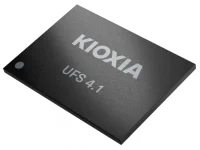
Kioxia is shoving QLC-based UFS 4.1 into phones, betting smaller packages and smarter controllers can offset density downsides.
Product moves at a glance
Product moves at a glance
- Kioxia started sending early UFS 4.1 storage units to device makers.
- The push targets bigger phone storage without burning extra PCB space.
- Capacity tiers roll out at 512 GB and 1 TB.
- Package size drops to 9 by 13 millimeters.
- Older footprint sat at 11 by 13 millimeters.
- Smaller storage frees routing space for radios, batteries, or cameras.
- The parts rely on BiCS FLASH eighth-generation 3D NAND.
- Cell design shifts to QLC rather than common TLC.
- Higher density leans hard on firmware, controllers, and error correction.
- Sequential write rates rise about twenty-five percent versus prior models.
- Random-read speed jumps near ninety percent based on Kioxia's claims.
- Random-write speed nearly doubles, shaping everyday phone responsiveness.
- Write amplification drops as much as three-point-five times.