2RuleSynth v3.3 finally drops Linux support alongside massive routing overhauls and voice count bumps.
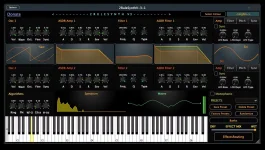
Effect signal paths became draggable graphs where users manually draw cables between nodes. Four macros with MAP mode allow direct knob connections by dragging the cable itself to set modulation depth. LFOs and envelopes drive parameters through this same visual system.
Voice count jumped from six to sixteen with added aftertouch and mod wheel vibrato support. Unison detune, stereo spread, and MTS-ESP microtuning expand sonic possibilities significantly. Two fresh effect nodes called Resonator and Modal join four internal LFOs featuring sample and hold waveforms.
Preset architecture now uses individual files that store complete effect graphs and macro routings. Categories organize content better than previous systems. Chorus delay knobs and reverb waveform centering issues received fixes alongside other stability improvements.
Linux builds arrive for the first time ever. Users must delete old v3.2 files manually before installing since both versions share identical plugin identifiers. Existing projects remain fully compatible because host identification stays unchanged despite the naming simplification.
Effect signal paths became draggable graphs where users manually draw cables between nodes. Four macros with MAP mode allow direct knob connections by dragging the cable itself to set modulation depth. LFOs and envelopes drive parameters through this same visual system.
Voice count jumped from six to sixteen with added aftertouch and mod wheel vibrato support. Unison detune, stereo spread, and MTS-ESP microtuning expand sonic possibilities significantly. Two fresh effect nodes called Resonator and Modal join four internal LFOs featuring sample and hold waveforms.
Preset architecture now uses individual files that store complete effect graphs and macro routings. Categories organize content better than previous systems. Chorus delay knobs and reverb waveform centering issues received fixes alongside other stability improvements.
Linux builds arrive for the first time ever. Users must delete old v3.2 files manually before installing since both versions share identical plugin identifiers. Existing projects remain fully compatible because host identification stays unchanged despite the naming simplification.