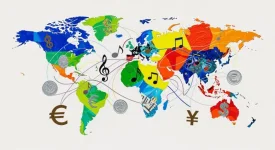
Global music copyright value hit a new record last year, according to an industry economist. That total reached 47.2 billion dollars in 2024, with most of that money coming from recorded music. The figure grew by a little over five percent from the prior year. The report from Will Page notes that growth is slowing down now that pandemic-related surges are over.
A major trend reshaping the business is domestic market strength, called glocalization. Streaming lets local artists dominate their home countries like never before. In Brazil, for example, Portuguese-language artists fill the entire local top one hundred chart. Some even reach high positions on global charts fueled almost entirely by streams from inside Brazil. A similar story is playing out in Denmark and South Korea. The economist also points to K-Pop's huge success in Japan, where it is growing rapidly and blurring traditional genre lines.
The report highlights several underlying issues beyond the headline number. Artificial intelligence music presents an asymmetric threat. It could add new consumer revenue while destroying value in business sectors like production music libraries. There is also a significant measurement gap. Vast sums, potentially hundreds of millions, are going uncounted in major markets like China and other unmeasured regions. The industry's reported total likely misses a sizable chunk of actual copyright value worldwide.
A major trend reshaping the business is domestic market strength, called glocalization. Streaming lets local artists dominate their home countries like never before. In Brazil, for example, Portuguese-language artists fill the entire local top one hundred chart. Some even reach high positions on global charts fueled almost entirely by streams from inside Brazil. A similar story is playing out in Denmark and South Korea. The economist also points to K-Pop's huge success in Japan, where it is growing rapidly and blurring traditional genre lines.
The report highlights several underlying issues beyond the headline number. Artificial intelligence music presents an asymmetric threat. It could add new consumer revenue while destroying value in business sectors like production music libraries. There is also a significant measurement gap. Vast sums, potentially hundreds of millions, are going uncounted in major markets like China and other unmeasured regions. The industry's reported total likely misses a sizable chunk of actual copyright value worldwide.