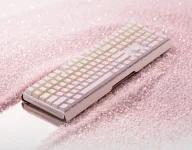
CHERRY says the MX3.0S PRO scans and reports at 8,000 Hz while its wired USB latency averages below 0.2 milliseconds. Fast numbers, sure, but they do not tell you how the keyboard decides a mechanical switch has actually settled.
The board uses MX ILLUMA Red, Brown, and Sakura options alongside an MX2A Blue option, so physical contact behavior matters here in a way it would not on a contactless Hall Effect board. You can have an 8,000 Hz scan loop ready every 0.125 milliseconds and still need firmware logic between a raw electrical transition and a clean key event.
This is the part worth separating from the usual polling-rate argument. The CHERRY MX3.0S PRO 8,000 Hz keyboard can report very quickly once an input is accepted, but the launch material does not currently spell out its debounce method, debounce duration, or whether key-down and key-up are treated differently.
Keyboard firmware has to stop those transitions from becoming repeated letters or extra game inputs. The underlying problem is old enough to have dedicated hardware solutions, including patented contact bounce filtering designed to suppress high-frequency chatter while preserving the intended switch signal.
None of this means every mechanical keyboard simply waits a fixed five or ten milliseconds before doing anything. Debounce is an algorithm choice, not one universal sleep timer, and different approaches trade immediate response against resistance to chatter and electrical noise.
Open-source QMK firmware makes the distinction unusually clear. An eager method can report the first state change immediately and ignore further changes for a configured period, while a deferred method waits for the switch to remain stable before reporting it. Per-key, per-row, and global variants change which inputs share the same debounce state.
So a quoted debounce value by itself does not automatically equal added key-down latency. A five-millisecond eager window can still report the initial press immediately, while a five-millisecond deferred scheme can hold the event until stability is confirmed. Release behavior can be handled differently again.
Suppose a keyboard scans every 0.125 milliseconds but uses a deferred debounce method that waits several milliseconds for a stable state. Faster scanning gives the firmware more observations during that window, but it does not erase the window. The event still waits for the debounce rule before the USB side can report it.
An eager design behaves differently. It can accept the first transition, send the event forward quickly, then lock out further transitions from the same key for a short period. The obvious downside is tuning. Set the filtering too aggressively and worn or noisy switches can chatter. Make it too conservative and repeated inputs or releases can feel slower than the headline polling rate suggests.
Switch age matters too. QMK's own debounce documentation notes that settling behavior can vary with switch type, age, and even pressing technique, which is why a single universal debounce number is a poor stand-in for real keyboard behavior.
Those missing details matter because a keyboard can post a very fast controller-side result without telling you exactly how the mechanical contact was validated beforehand. RTINGS separates switch latency from PCB latency for a similar reason. Physical travel, electrical contact, firmware handling, and USB reporting are different stages and need different measurements.
For the MX3.0S PRO, the sensible reading is narrow. Its 8,000 Hz scan and report rates give CHERRY room to move accepted inputs through the controller quickly, and the stated USB average suggests the board is doing more than simply attaching an 8K label to a slow pipeline.
The unanswered bit is debounce. Until CHERRY publishes the algorithm or independent testing measures the keyboard from physical switch movement through USB output, nobody can derive the mechanical-switch contribution from the polling rate alone. A clean 0.125-millisecond reporting interval is impressive, but it only starts counting after the keyboard has decided the press is real.
The board uses MX ILLUMA Red, Brown, and Sakura options alongside an MX2A Blue option, so physical contact behavior matters here in a way it would not on a contactless Hall Effect board. You can have an 8,000 Hz scan loop ready every 0.125 milliseconds and still need firmware logic between a raw electrical transition and a clean key event.
This is the part worth separating from the usual polling-rate argument. The CHERRY MX3.0S PRO 8,000 Hz keyboard can report very quickly once an input is accepted, but the launch material does not currently spell out its debounce method, debounce duration, or whether key-down and key-up are treated differently.
Mechanical contacts do not produce clean edges
A mechanical key switch closes an electrical circuit when its contacts meet. Real contacts can bounce for a short period instead of changing from open to closed once and staying there, which can produce several rapid electrical transitions from one physical press.Keyboard firmware has to stop those transitions from becoming repeated letters or extra game inputs. The underlying problem is old enough to have dedicated hardware solutions, including patented contact bounce filtering designed to suppress high-frequency chatter while preserving the intended switch signal.
None of this means every mechanical keyboard simply waits a fixed five or ten milliseconds before doing anything. Debounce is an algorithm choice, not one universal sleep timer, and different approaches trade immediate response against resistance to chatter and electrical noise.
Open-source QMK firmware makes the distinction unusually clear. An eager method can report the first state change immediately and ignore further changes for a configured period, while a deferred method waits for the switch to remain stable before reporting it. Per-key, per-row, and global variants change which inputs share the same debounce state.
So a quoted debounce value by itself does not automatically equal added key-down latency. A five-millisecond eager window can still report the initial press immediately, while a five-millisecond deferred scheme can hold the event until stability is confirmed. Release behavior can be handled differently again.
Debounce strategy decides where latency lands
Polling and scanning only tell you how often parts of the system get an opportunity to do work. Debounce decides when noisy mechanical information becomes trustworthy enough to pass forward, and the order matters when the claimed USB average is already below a quarter of a millisecond.Suppose a keyboard scans every 0.125 milliseconds but uses a deferred debounce method that waits several milliseconds for a stable state. Faster scanning gives the firmware more observations during that window, but it does not erase the window. The event still waits for the debounce rule before the USB side can report it.
An eager design behaves differently. It can accept the first transition, send the event forward quickly, then lock out further transitions from the same key for a short period. The obvious downside is tuning. Set the filtering too aggressively and worn or noisy switches can chatter. Make it too conservative and repeated inputs or releases can feel slower than the headline polling rate suggests.
Switch age matters too. QMK's own debounce documentation notes that settling behavior can vary with switch type, age, and even pressing technique, which is why a single universal debounce number is a poor stand-in for real keyboard behavior.
CHERRY's latency claim leaves a useful gap
CHERRY's launch information gives an average USB latency below 0.2 milliseconds, which is far more useful than pretending 8,000 Hz automatically means 0.125 milliseconds of total keyboard latency. Still, the published figure does not reveal the test point, switch condition, debounce policy, sample size, or whether press and release events were measured separately.Those missing details matter because a keyboard can post a very fast controller-side result without telling you exactly how the mechanical contact was validated beforehand. RTINGS separates switch latency from PCB latency for a similar reason. Physical travel, electrical contact, firmware handling, and USB reporting are different stages and need different measurements.
For the MX3.0S PRO, the sensible reading is narrow. Its 8,000 Hz scan and report rates give CHERRY room to move accepted inputs through the controller quickly, and the stated USB average suggests the board is doing more than simply attaching an 8K label to a slow pipeline.
The unanswered bit is debounce. Until CHERRY publishes the algorithm or independent testing measures the keyboard from physical switch movement through USB output, nobody can derive the mechanical-switch contribution from the polling rate alone. A clean 0.125-millisecond reporting interval is impressive, but it only starts counting after the keyboard has decided the press is real.