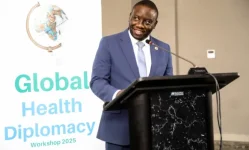
The Director General of the East, Central, and Southern Africa Health Community, Dr. Ntuli Kapologwe, has urged the continent to adopt a more assertive and unified approach in global health governance. Speaking at a Global Health Diplomacy Workshop in Lusaka, he stated that Africa must transition from a passive participant to a proactive architect of international health frameworks. He emphasized the need for the continent to negotiate with a single, clear voice to ensure global policies reflect its specific realities.
The workshop focused on new global health instruments, namely the Pandemic Agreement and the Revised International Health Regulations. Dr. Kapologwe described their adoption as a historic turning point for the continent. The Permanent Secretary of Zambia’s Ministry of Health, Dr. Kennedy Lishimpi, who opened the event, reinforced this sentiment by stating that regional cooperation is essential for collective health security. He highlighted the importance of the agreements' equity provisions but also cautioned that Africa must strategically navigate their implementation to protect its sovereignty and strengthen health system resilience.
A representative from the WHO Africa Region, Dr. Charles Kuria Njuguna, provided reflections on the negotiation process. He pointed out that the critical next step for Africa is ensuring these international commitments are translated into tangible action and results for its populations.
The workshop focused on new global health instruments, namely the Pandemic Agreement and the Revised International Health Regulations. Dr. Kapologwe described their adoption as a historic turning point for the continent. The Permanent Secretary of Zambia’s Ministry of Health, Dr. Kennedy Lishimpi, who opened the event, reinforced this sentiment by stating that regional cooperation is essential for collective health security. He highlighted the importance of the agreements' equity provisions but also cautioned that Africa must strategically navigate their implementation to protect its sovereignty and strengthen health system resilience.
A representative from the WHO Africa Region, Dr. Charles Kuria Njuguna, provided reflections on the negotiation process. He pointed out that the critical next step for Africa is ensuring these international commitments are translated into tangible action and results for its populations.