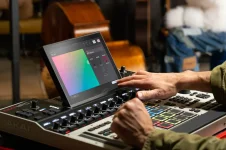
Akai finally ditched its ancient internals for a massive gray slab running somewhat modern specs. This MPC XL flagship supposedly quadruples processing power using a Gen 2 eight-core chip while packing sixteen gigs of RAM, which basically means less choking when stacking plugins. They threw in a two-hundred-fifty-six-gig NVMe drive for storage, though digital hoarders can jam an extra drive into the expansion bay.
The main gimmick involves new MPCe pads with 3D-sensing tech. Each square splits into quadrants, letting producers morph parameters via finger wiggling rather than just velocity. That enormous ten-inch touchscreen tilts for better viewing angles, and sixteen Q-Link knobs come with tiny individual OLED screens to display whatever random value gets tweaked.
Connectivity looks decent for hardware heads. The back panel hosts dual mic inputs with phantom power alongside phono jacks for sampling vinyl. Modular synth nerds get sixteen CV/Gate outputs to control their Eurorack walls. If the wallet can handle a nearly three-thousand-dollar hit, this unit aims to replace the computer entirely while running that updated MPC3 operating system.
The main gimmick involves new MPCe pads with 3D-sensing tech. Each square splits into quadrants, letting producers morph parameters via finger wiggling rather than just velocity. That enormous ten-inch touchscreen tilts for better viewing angles, and sixteen Q-Link knobs come with tiny individual OLED screens to display whatever random value gets tweaked.
Connectivity looks decent for hardware heads. The back panel hosts dual mic inputs with phantom power alongside phono jacks for sampling vinyl. Modular synth nerds get sixteen CV/Gate outputs to control their Eurorack walls. If the wallet can handle a nearly three-thousand-dollar hit, this unit aims to replace the computer entirely while running that updated MPC3 operating system.