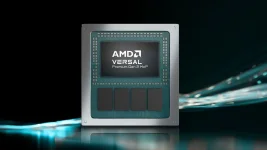
AMD’s cooking a tiny slice of silicon that packs PCIe 6.0 and CXL 3.1, sampling near the tail end of 2026. They managed to shrink the board footprint up to 60%, then stuffed the chip with memory encryption, PCIe IDE, and 400G crypto engines that don’t flinch from 40 below zero up to 110 Celsius.
That temperature tolerance alone screams defense, aerospace, and rugged networking. Throw in AI inference pipelines and high-bitrate video, and you can see why test-and-measurement types are already salivating. The whole thing targets workloads where your gear bakes inside an enclosure yet still needs to shuttle data at 64 GT/s per lane.
Vivado and Vitis remain the programming toolchain, keeping it cozy for the FPGA faithful. Volume production won’t ramp until the second half of 2027, so the real-world silicon dance is still a ways off. No name got stamped on the box yet, but the spec sheet reads like a backbone play for all the extreme-edge compute that normal server gear can’t handle.
That temperature tolerance alone screams defense, aerospace, and rugged networking. Throw in AI inference pipelines and high-bitrate video, and you can see why test-and-measurement types are already salivating. The whole thing targets workloads where your gear bakes inside an enclosure yet still needs to shuttle data at 64 GT/s per lane.
Vivado and Vitis remain the programming toolchain, keeping it cozy for the FPGA faithful. Volume production won’t ramp until the second half of 2027, so the real-world silicon dance is still a ways off. No name got stamped on the box yet, but the spec sheet reads like a backbone play for all the extreme-edge compute that normal server gear can’t handle.