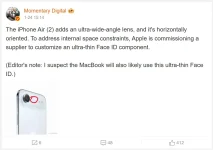
Apple chases ultra-thin bragging rights again, betting a slimmer Face ID can rescue the iPhone Air form factor from its own compromises.
Why did the first Air hit limits
Why did the first Air hit limits
- The body measures just 5.6mm thick.
- Space tradeoffs killed battery size.
- Only one rear camera made the cut.
- Thin design overpowered practicality.
- A second rear camera enters the plan.
- The extra sensor targets ultrawide shots.
- Both cameras sit at 48MP resolution.
- The layout runs horizontally across the back.
- Face ID hardware gets redesigned to be thinner.
- An unnamed supplier builds the new module.
- Internal space frees up for extra optics.
- Engineering focuses on depth reduction.
- The Air 2 skips the iPhone 18 cycle.
- A prior report points to Spring 2027.
- Testing reportedly stays on schedule.
- Cancellation rumors fail to stick.
- Production already dropped by one million units.
- Demand stayed weak for the first model.
- Apple still wants the thin line standardized.
- The Air acts as a long-term experiment.
- Telephoto rumors float without confirmation.
- Periscope lenses face size limits.
- MacBook models may inherit the tech.
- Dynamic Island shrinkage stays speculative.