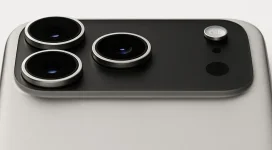
Apple advances camera sensor development through LOFIC technology testing, according to recent Weibo reports. The company creates prototypes featuring Lateral Overflow Integration Capacitor systems that deliver 20 stops of dynamic range. This represents a significant improvement over current iPhone models that achieve only 12 to 14 stops. The sensor employs stacked architecture with separate layers for light capture and real-time processing. Pixel-level noise reduction occurs before computational processing begins.
LOFIC technology manages light storage dynamically for each individual pixel across varying brightness conditions. The system preserves detail in both bright highlights and dark shadows within single frames. Apple reduces dependency on Sony sensors through this custom hardware development. The iPhone 17 series will likely continue using Sony components while the iPhone 18 lineup may feature the new technology. Future Vision Pro headsets could also benefit from these advanced camera sensors for enhanced mixed-reality applications.
LOFIC technology manages light storage dynamically for each individual pixel across varying brightness conditions. The system preserves detail in both bright highlights and dark shadows within single frames. Apple reduces dependency on Sony sensors through this custom hardware development. The iPhone 17 series will likely continue using Sony components while the iPhone 18 lineup may feature the new technology. Future Vision Pro headsets could also benefit from these advanced camera sensors for enhanced mixed-reality applications.