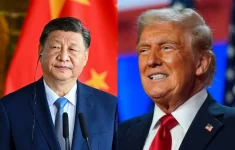
China Counters US Trade Moves with New Tariffs and Restrictions.
China responded to US trade measures with targeted tariffs on American goods and fresh business restrictions. The move followed President Donald Trump's blanket 10% tariff on Chinese imports.
Beijing plans to impose a 10% tax on US coal and liquefied natural gas and a 15% tax on crude oil starting February 10. The impact may be limited—US imports represent just 1.7% of China's total crude purchases in 2023.
China added taxes on agricultural machinery, pickup trucks, and large cars. These sectors represent small portions of Chinese imports, as most vehicles come from Europe and Japan. The country has also recently boosted domestic farm equipment production.
Julian Evans-Pritchard from Capital Economics notes that China's response appears measured. The targeted goods amount to about $20 billion in annual imports—roughly 12% of China's US purchases. This contrasts with US measures affecting $450 billion of Chinese goods.
Beyond tariffs, Chinese authorities launched an anti-monopoly investigation into Google. The tech giant's search services have been blocked in China since 2010. Google maintains a limited presence through apps and games, with China generating about 1% of its global sales.
Beijing placed PVH, owner of Calvin Klein and Tommy Hilfiger, on its "unreliable entity" list. This status could result in potential fines and visa restrictions for foreign employees. The US maintains a similar list requiring Washington's approval for certain purchases from American companies.
China imposed export controls on 25 rare metals used in electronics and military equipment. The country produces nearly 90% of global refined output. The list includes tungsten, which is essential for aerospace applications.
President Trump indicated plans for alternative supply chains. He proposed Ukraine provide rare earth metals in exchange for $300 billion in support against Russia.
Trade tensions between the nations continue, though Trump mentioned upcoming talks with Chinese President Xi Jinping. A deal remains possible before the new measures take effect.
China responded to US trade measures with targeted tariffs on American goods and fresh business restrictions. The move followed President Donald Trump's blanket 10% tariff on Chinese imports.
Beijing plans to impose a 10% tax on US coal and liquefied natural gas and a 15% tax on crude oil starting February 10. The impact may be limited—US imports represent just 1.7% of China's total crude purchases in 2023.
China added taxes on agricultural machinery, pickup trucks, and large cars. These sectors represent small portions of Chinese imports, as most vehicles come from Europe and Japan. The country has also recently boosted domestic farm equipment production.
Julian Evans-Pritchard from Capital Economics notes that China's response appears measured. The targeted goods amount to about $20 billion in annual imports—roughly 12% of China's US purchases. This contrasts with US measures affecting $450 billion of Chinese goods.
Beyond tariffs, Chinese authorities launched an anti-monopoly investigation into Google. The tech giant's search services have been blocked in China since 2010. Google maintains a limited presence through apps and games, with China generating about 1% of its global sales.
Beijing placed PVH, owner of Calvin Klein and Tommy Hilfiger, on its "unreliable entity" list. This status could result in potential fines and visa restrictions for foreign employees. The US maintains a similar list requiring Washington's approval for certain purchases from American companies.
China imposed export controls on 25 rare metals used in electronics and military equipment. The country produces nearly 90% of global refined output. The list includes tungsten, which is essential for aerospace applications.
President Trump indicated plans for alternative supply chains. He proposed Ukraine provide rare earth metals in exchange for $300 billion in support against Russia.
Trade tensions between the nations continue, though Trump mentioned upcoming talks with Chinese President Xi Jinping. A deal remains possible before the new measures take effect.