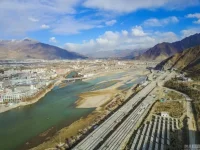
A Stockholm-based research institute has called for governments and international organizations to prioritize the Tibetan Plateau in global climate policy ahead of the UN climate conference COP30 in Brazil this November. The Stockholm Centre for South Asian and Indo-Pacific Affairs criticized China's infrastructure development and resource extraction policies for causing severe ecological damage to the region. The report warns that the plateau is warming at twice the global average rate, threatening water supplies for nearly two billion people across South and Southeast Asia.
The study documents how Beijing's construction of highways, railways, airports, and hydropower dams has disrupted permafrost layers and displaced local populations. A proposed mega-dam on the Yarlung Tsangpo River could cost more than $160 billion and poses risks to downstream ecosystems in India and Bangladesh. The report also highlights the forced relocation of nearly one million Tibetans since 2000 under programs justified as ecological protection. The institute recommends establishing independent monitoring systems and formal transboundary water-governance mechanisms to address the crisis.
The study documents how Beijing's construction of highways, railways, airports, and hydropower dams has disrupted permafrost layers and displaced local populations. A proposed mega-dam on the Yarlung Tsangpo River could cost more than $160 billion and poses risks to downstream ecosystems in India and Bangladesh. The report also highlights the forced relocation of nearly one million Tibetans since 2000 under programs justified as ecological protection. The institute recommends establishing independent monitoring systems and formal transboundary water-governance mechanisms to address the crisis.