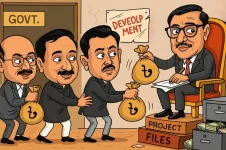
Fifteen construction companies won almost all major road projects from Bangladesh's government between 2011 and 2024. These firms received contracts worth 750 billion taka out of 830 billion taka total spending. More than 1,000 contractors had registered with the Roads and Highways Department during this period. The select group secured nearly 90 percent of all available work. Political connections helped these companies beat their competitors.
Former minister Obaidul Quader and other ruling party leaders backed specific contractors. The companies paid at least 15 percent of each contract value as bribes to officials. Hasan Techno Builders earned the most money at 11,118 crore taka. Rana Builders came second with 10,911 crore taka in contracts. Several firm owners had family ties to government leaders.
Officials wrote project proposals that favored certain companies from the start. Transparency International found corruption affected up to 40 percent of project costs. Contractors and government engineers worked together to inflate budgets. Bribes between 200,000 and one million taka bought approvals from planning officials. Local politicians also demanded payments from winning bidders.
Some blacklisted companies continue operating under different names. Others obtained court orders that block government punishment. The acting chief engineer says contracts followed legal procedures. He claims authorities took action against firms that broke rules. The corruption damaged infrastructure quality and hurt public trust in government spending.
Former minister Obaidul Quader and other ruling party leaders backed specific contractors. The companies paid at least 15 percent of each contract value as bribes to officials. Hasan Techno Builders earned the most money at 11,118 crore taka. Rana Builders came second with 10,911 crore taka in contracts. Several firm owners had family ties to government leaders.
Officials wrote project proposals that favored certain companies from the start. Transparency International found corruption affected up to 40 percent of project costs. Contractors and government engineers worked together to inflate budgets. Bribes between 200,000 and one million taka bought approvals from planning officials. Local politicians also demanded payments from winning bidders.
Some blacklisted companies continue operating under different names. Others obtained court orders that block government punishment. The acting chief engineer says contracts followed legal procedures. He claims authorities took action against firms that broke rules. The corruption damaged infrastructure quality and hurt public trust in government spending.