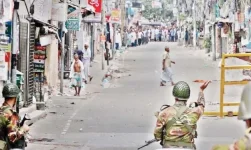
Violence erupted across Bangladesh on July 20 as protesters defied a nationwide curfew imposed by authorities. Security forces killed 37 demonstrators while students continued demanding government reforms and an apology from Prime Minister Sheikh Hasina. The detention of student coordinator Nahid Islam at midnight on July 19 triggered widespread anger among movement participants. Army personnel patrolled streets after the curfew began, though officials relaxed restrictions for two hours to allow emergency activities. Government ministers announced a two-day public holiday for July 21-22 as unrest spread beyond official control.
Dhaka experienced the heaviest casualties with 25 deaths reported in the capital alone. Protesters clashed with police at Mirpur-10, Jatrabari, and Mohammadpur while demonstrators burned the Kazipara metro station and a highway police outpost. Security forces fired live ammunition and tear gas to disperse crowds blocking major roads with trucks. International observers from Britain and the European Union expressed concern about the use of excessive force against students. Student coordinators met with government ministers, but movement leaders rejected any unauthorized negotiations.
Dhaka experienced the heaviest casualties with 25 deaths reported in the capital alone. Protesters clashed with police at Mirpur-10, Jatrabari, and Mohammadpur while demonstrators burned the Kazipara metro station and a highway police outpost. Security forces fired live ammunition and tear gas to disperse crowds blocking major roads with trucks. International observers from Britain and the European Union expressed concern about the use of excessive force against students. Student coordinators met with government ministers, but movement leaders rejected any unauthorized negotiations.