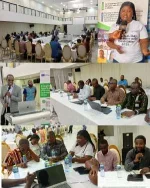
The Ghana Federation of Disability Organizations conducted a training session on Tuesday at SG Mall in Kumasi to strengthen policymakers capabilities for incorporating accessibility considerations into education, employment, and healthcare frameworks. Programs Manager Doris Ndebugri emphasized that disabled individuals require direct participation in governance rather than token consultation, noting that the Affirmative Action Bill demonstrated how limited engagement created deficiencies requiring subsequent correction.
The European Union finances the three-year initiative through partnerships with the Mental Health Society of Ghana and Africa Disability Institute, targeting 16 organizations representing disabled citizens. Project Officer Evans Oheneba Mensah stated the program addresses systemic exclusion from mainstream policy discussions through advocacy and capacity development for both government officials and disabled communities.
The federation anticipates that stakeholders will adopt stronger inclusion practices aligned with the UN Convention on the Rights of Persons with Disabilities by the project conclusion, producing concrete policy reforms reflecting disabled citizens' perspectives and requirements across district and national administrative levels.
The European Union finances the three-year initiative through partnerships with the Mental Health Society of Ghana and Africa Disability Institute, targeting 16 organizations representing disabled citizens. Project Officer Evans Oheneba Mensah stated the program addresses systemic exclusion from mainstream policy discussions through advocacy and capacity development for both government officials and disabled communities.
The federation anticipates that stakeholders will adopt stronger inclusion practices aligned with the UN Convention on the Rights of Persons with Disabilities by the project conclusion, producing concrete policy reforms reflecting disabled citizens' perspectives and requirements across district and national administrative levels.