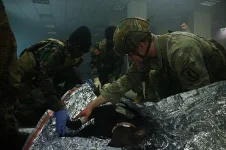
Ghanaian medics just scored high at a brutal international military competition. Armed forces medical personnel from Ghana joined teams from Italy, Liberia, and the United States for a Best Medic event in Vicenza, Italy. The grueling challenge tested twenty-four participants on physical endurance and technical skill under simulated combat conditions. Ghana fielded a joint team with army, navy, and air force members for the second time.
Sergeant Cornelius Adagbe and Leading Seaman Ato Amonoo Rockson secured third place overall for the Ghana Armed Forces. Amonoo Rockson earned the second-highest fitness test score, while Adagbe placed second in a demanding foot march event. The competition involved two phases, starting with a knowledge exchange covering chemical, biological, radiological, and nuclear training and marksmanship. A rigorous two-day contest followed, replicating high-stress life-saving scenarios.
Top performers were recognized in specific skill areas like delayed evacuation casualty management and tactical combat casualty care. A United States embassy representative in Accra noted Ghana's continued participation demonstrates the professional caliber of its medical personnel. The event aimed to build medical excellence and interoperability between partner nations. Training included resiliency exercises, trauma care instruction, and prolonged casualty care procedures.
The multinational environment allowed medics to refine advanced skills for seamless integration during future crises. United States Army leadership stated that the competition creates a high-stress environment to validate critical lifesaving abilities. This partnership builds on broader security cooperation between the participating nations, emphasizing shared medical readiness and humanitarian assistance capabilities.
Sergeant Cornelius Adagbe and Leading Seaman Ato Amonoo Rockson secured third place overall for the Ghana Armed Forces. Amonoo Rockson earned the second-highest fitness test score, while Adagbe placed second in a demanding foot march event. The competition involved two phases, starting with a knowledge exchange covering chemical, biological, radiological, and nuclear training and marksmanship. A rigorous two-day contest followed, replicating high-stress life-saving scenarios.
Top performers were recognized in specific skill areas like delayed evacuation casualty management and tactical combat casualty care. A United States embassy representative in Accra noted Ghana's continued participation demonstrates the professional caliber of its medical personnel. The event aimed to build medical excellence and interoperability between partner nations. Training included resiliency exercises, trauma care instruction, and prolonged casualty care procedures.
The multinational environment allowed medics to refine advanced skills for seamless integration during future crises. United States Army leadership stated that the competition creates a high-stress environment to validate critical lifesaving abilities. This partnership builds on broader security cooperation between the participating nations, emphasizing shared medical readiness and humanitarian assistance capabilities.