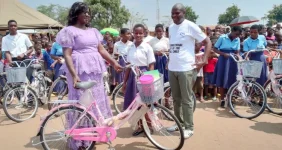
Hundreds of girls in rural Malawi are staying in school longer thanks to a program that provides bicycles and other support. Georgina Kamuyanja, a Form Four student at Utale Community Day Secondary School in Balaka, used to walk several kilometers each morning, often arriving tired and late. Now, with a bicycle from the Girls MARZ Project, she reaches class early and alert.
The initiative, run by the Concerned Youth Organisation, the Centre for Alternatives for Victimized Women and Children, and Oxfam in Malawi, has given 500 secondary school girls in Balaka and Machinga bicycles, school fees, uniforms, learning materials, and solar lamps. Officials say these resources help reduce dropout rates and improve academic performance. At a recent event commemorating the International Day of the Girl Child, education leaders and project organizers emphasized the importance of community collaboration in keeping girls in school and preparing them for leadership roles. The United Nations established October 11 as the International Day of the Girl Child in 2011 to spotlight challenges like gender-based violence, child marriage, and unequal access to education and health care.
The initiative, run by the Concerned Youth Organisation, the Centre for Alternatives for Victimized Women and Children, and Oxfam in Malawi, has given 500 secondary school girls in Balaka and Machinga bicycles, school fees, uniforms, learning materials, and solar lamps. Officials say these resources help reduce dropout rates and improve academic performance. At a recent event commemorating the International Day of the Girl Child, education leaders and project organizers emphasized the importance of community collaboration in keeping girls in school and preparing them for leadership roles. The United Nations established October 11 as the International Day of the Girl Child in 2011 to spotlight challenges like gender-based violence, child marriage, and unequal access to education and health care.