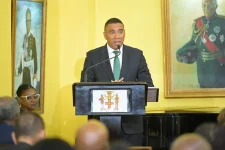
Prime Minister Andrew Holness announced that Jamaica will likely need to borrow money to fund reconstruction after Hurricane Melissa, despite initial access to approximately 1.15 billion dollars from disaster funds and an International Monetary Fund facility. He clarified that the government is not awash with cash, countering public speculation about available resources.
The scale of the challenge was underscored by a World Bank assessment presented at the briefing, which estimated total physical damage at 8.8 billion dollars. This figure represents forty-one percent of Jamaica's gross domestic product. The most severe damage affected residential buildings, accounting for 3.7 billion dollars, while infrastructure losses reached 2.9 billion dollars.
Holness explained that the government would be responsible for a significant portion of the costs, far exceeding the immediate funds available. He stated that financing the gap would require additional borrowing, dismissing notions that the situation allowed for unchecked government spending. The southwestern parishes of St. James, Westmoreland, and St. Elizabeth sustained over sixty percent of the total losses.
The scale of the challenge was underscored by a World Bank assessment presented at the briefing, which estimated total physical damage at 8.8 billion dollars. This figure represents forty-one percent of Jamaica's gross domestic product. The most severe damage affected residential buildings, accounting for 3.7 billion dollars, while infrastructure losses reached 2.9 billion dollars.
Holness explained that the government would be responsible for a significant portion of the costs, far exceeding the immediate funds available. He stated that financing the gap would require additional borrowing, dismissing notions that the situation allowed for unchecked government spending. The southwestern parishes of St. James, Westmoreland, and St. Elizabeth sustained over sixty percent of the total losses.