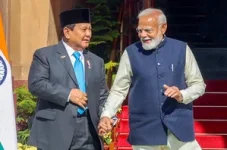
India and Indonesia could emerge as mediators for Middle Eastern stability through their positions as non-aligned democracies with influence across the Global South, according to Italian geopolitical expert Sergio Restelli writing in The Times of Israel. Both nations demonstrated pragmatic approaches at the United Nations by linking Palestinian recognition to Israel's security guarantees and demilitarization commitments. New Delhi maintains strong ties with Israel while preserving credibility among Arab partners, and Jakarta signals willingness to acknowledge Israeli security concerns despite representing Muslim world perspectives.
Indonesian President Prabowo Subianto told the General Assembly that his country would recognize Israel only after Israel recognizes Palestine, and he concluded his remarks by saying shalom to the assembly. Singapore's foreign ministry reinforced this conditional framework by stating that any Palestinian state must reject terrorism and accept Israel's right to exist. The approach contrasts with Pakistan's support for extremist networks, and it positions India and Indonesia as potential architects of regional balance through reciprocal commitments rather than unconditional demands.
Indonesian President Prabowo Subianto told the General Assembly that his country would recognize Israel only after Israel recognizes Palestine, and he concluded his remarks by saying shalom to the assembly. Singapore's foreign ministry reinforced this conditional framework by stating that any Palestinian state must reject terrorism and accept Israel's right to exist. The approach contrasts with Pakistan's support for extremist networks, and it positions India and Indonesia as potential architects of regional balance through reciprocal commitments rather than unconditional demands.