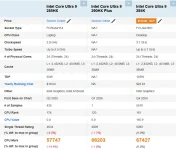
Intel leaked a monstrous mobile processor online, and the performance gains look surprisingly legitimate. A PassMark entry details the unannounced Core Ultra 9 290HX Plus running inside an MSI machine equipped with an RTX 5090 and Samsung DDR5-5600 memory. While the corporation skipped mentioning this Arrow Lake Refresh silicon at CES 2026, the data confirms validation testing is happening ahead of a rumored spring release.
Synthetic benchmarks reveal the chip hit 66,203 points for multi-core and 5,009 points in single-thread metrics. Those figures place the component well above the Core Ultra 9 285HX, beating the predecessor by roughly 12.8% and 7.5%, respectively. If retail laptops match this output, enthusiasts are looking at a serious generational leap rather than a minor bump.
The results become even crazier when stacked against the desktop-class Core Ultra 9 285K. This laptop CPU falls within 2% of the desktop part in multi-core tasks, which seems insane considering the thermal limitations involved. However, power limits and vendor-specific tuning often inflate early numbers.
Specs suggest the core count stays at 8P + 16E, implying that clock speed tweaks or microcode updates caused the boost. Faster RAM could theoretically squeeze out more frames, but we need the final hardware to verify everything.
Synthetic benchmarks reveal the chip hit 66,203 points for multi-core and 5,009 points in single-thread metrics. Those figures place the component well above the Core Ultra 9 285HX, beating the predecessor by roughly 12.8% and 7.5%, respectively. If retail laptops match this output, enthusiasts are looking at a serious generational leap rather than a minor bump.
The results become even crazier when stacked against the desktop-class Core Ultra 9 285K. This laptop CPU falls within 2% of the desktop part in multi-core tasks, which seems insane considering the thermal limitations involved. However, power limits and vendor-specific tuning often inflate early numbers.
Specs suggest the core count stays at 8P + 16E, implying that clock speed tweaks or microcode updates caused the boost. Faster RAM could theoretically squeeze out more frames, but we need the final hardware to verify everything.