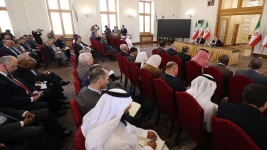
Iran declared on Sunday that its nuclear cooperation with the International Atomic Energy Agency has ended after Britain, France, and Germany reimposed United Nations sanctions on Tehran. Foreign Minister Abbas Araghchi stated the Cairo agreement from last September no longer applies, and European nations will play a reduced role in future talks. The framework had restored inspections after Iran suspended cooperation following Israeli and American strikes on its nuclear facilities in June.
Tehran accused the IAEA of failing to condemn attacks on its nuclear infrastructure despite Iranian compliance with the Non-Proliferation Treaty. Hardline lawmakers urged withdrawal from the treaty, but President Masoud Pezeshkian said Iran remains committed to its legal obligations. The snapback mechanism reinstates a global arms embargo and financial restrictions that were lifted under the 2015 nuclear accord.
Parliament approved legislation on Sunday to remove four zeros from the rial as the nation confronts economic pressures from renewed sanctions. The measure replaces 10,000 old rials with one new rial to simplify transactions, but critics warn the change is cosmetic without structural reforms. Analysts caution that severed IAEA cooperation could drive nuclear activities underground and heighten regional tensions.
Tehran accused the IAEA of failing to condemn attacks on its nuclear infrastructure despite Iranian compliance with the Non-Proliferation Treaty. Hardline lawmakers urged withdrawal from the treaty, but President Masoud Pezeshkian said Iran remains committed to its legal obligations. The snapback mechanism reinstates a global arms embargo and financial restrictions that were lifted under the 2015 nuclear accord.
Parliament approved legislation on Sunday to remove four zeros from the rial as the nation confronts economic pressures from renewed sanctions. The measure replaces 10,000 old rials with one new rial to simplify transactions, but critics warn the change is cosmetic without structural reforms. Analysts caution that severed IAEA cooperation could drive nuclear activities underground and heighten regional tensions.