Pakistani forces launched a covert military operation against India during 1999, breaching the recently signed Lahore Declaration. Armed infiltrators occupied strategic high-altitude positions along the Line of Control in Kashmir's Kargil region. The Pakistan Army executed Operation Badr to gain territorial advantage and sever India's connection to Siachen. Indian forces responded with Operation Vijay to reclaim occupied territory. This conflict became the first conventional war between nuclear-armed nations.
Indian soldiers fought at extreme altitudes between 8,000 and 18,000 feet under harsh conditions. Captain Vikram Batra led successful assaults on key peaks before sacrificing his life for a comrade. Grenadier Yogendra Singh Yadav survived 15 gunshot wounds while single-handedly destroying enemy positions at Tiger Hill. Both warriors received the Param Vir Chakra for exceptional valor. Pakistani leadership initially denied military involvement, abandoning fallen soldiers.
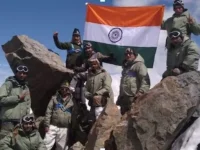
Indian forces raised the national flag over Tiger Hill on July 4, 1999, securing the vital highway to Ladakh. The victory demonstrated courage and determination against entrenched opposition in mountainous terrain.
Indian soldiers fought at extreme altitudes between 8,000 and 18,000 feet under harsh conditions. Captain Vikram Batra led successful assaults on key peaks before sacrificing his life for a comrade. Grenadier Yogendra Singh Yadav survived 15 gunshot wounds while single-handedly destroying enemy positions at Tiger Hill. Both warriors received the Param Vir Chakra for exceptional valor. Pakistani leadership initially denied military involvement, abandoning fallen soldiers.
Indian forces raised the national flag over Tiger Hill on July 4, 1999, securing the vital highway to Ladakh. The victory demonstrated courage and determination against entrenched opposition in mountainous terrain.