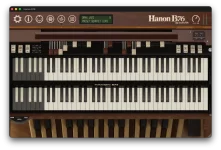
LostIn70s has launched Hanon B76, a virtual tonewheel organ with new speaker models and more sound controls. It takes the free Hanon B70 as its base, then adds more ways to shape an organ sound for gigs or tracks.
At its core, physical modeling drives the organ. Players can pick from three wheel sets, with pure sine tones, true wheel shapes, or extra harmonics. Key clicks and signal bleed can be tweaked, while a bass unit and six chorus or vibrato modes add more range.
The L76 rotary cab is a big part of the update. LostIn70s used tests from its studio to build the model, and the older L70 remains an option. Each rotor has its own speed and ramp controls, with balance and stereo spread settings. Even the Leslie preamp gets a drive knob.
For a change of tone, Lord Major and American Classic amp models can work with the rotary cab. Then there's a whole batch of old-school effects, from auto-wah and phaser to flanger, ring modulator, delay, and two types of reverb. A three-band EQ rounds it out.
Live players get a fair bit of control as well. Separate MIDI paths serve the upper keys, lower keys, and bass, with splits, pitch shifts, and MIDI Learn on tap. Akai MIDImix users even get direct support and LED status lights.
Interface choices cover a full organ view or a lean layout for stage use. And with 36 stock patches for jazz, blues, rock, and gospel, there's plenty to try right off the bat.
The launch price lands at €16.99, against a normal €27.99. Windows users need a 64-bit system running Windows 10 or later, while Mac users need macOS 15 or newer. VST3 and AAX work across both platforms, AU serves Macs, and separate desktop apps are part of the deal.