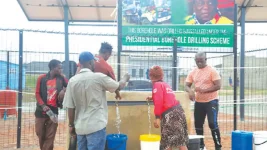
Water taps are finally winning in rural Zimbabwe, as boreholes stack up fast and daily survival quietly flips into something that looks like progress.
Why this suddenly matters
Why this suddenly matters
- Honestly, clean water is showing up where it barely existed, and that alone is changing daily routines.
- Farming is getting easier, food plans are less shaky, and health risks from sketchy water are backing off.
- Kids, schools, and households are no longer burning hours hauling water.
- The Presidential Borehole Drilling Programme kicked off in December 2022 with a simple target: one borehole per village.
- The setup feeds homes, schools, and farming projects instead of just dropping pipes and leaving.
- The push is framed as community-first, not top-down charity.
- By mid-2025, more than 4,000 boreholes were drilled through the Presidential Rural Development Programme.
- On a much larger scale, the Rural Infrastructure Development Agency has pushed past 45,000 boreholes nationwide.
- Living conditions in rural areas are visibly shifting as a result.
- Zimbabwe National Water Authority is managing the programme day to day.
- Officials are pitching it as a long game rather than a quick infrastructure flex.
- A reported 2,890 boreholes have already been drilled directly under this scheme.
- Regional spreads show Manicaland at 429, Mashonaland West at 206, Midlands at 300, Masvingo at 535, and Harare at 346.
- Other provinces are also on the list, adding to the national footprint.
- The plan ties straight into rural industrialisation, not just survival basics.
- The Presidential Rural Development Programme is aiming for 35,000 Village Business Units across 35,000 villages.
- The idea is water first, livelihoods right after.
- In Muzarabani, residents are already talking like water scarcity is becoming a past problem.
- Locals see a new space for agriculture that actually sustains families year-round.
- Gift Mubinyi summed it up by saying daily life feels fundamentally changed, not slightly improved.