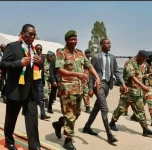
President Emmerson Mnangagwa delivered more than 100 vehicles to the Zimbabwe Defence Forces on Monday as part of a 700-vehicle program he described as improving military mobility. Political analysts view the distribution as a calculated effort to secure loyalty within the armed forces, which remain the decisive power brokers in the nation. Mnangagwa has systematically reshuffled military leadership since seizing power in 2017, removing commanders and promoting allies to prevent the emergence of rival power centers. The rapid removal of Lieutenant-General Anselem Sanyatwe as army commander in March 2025 and his reassignment to lead the sports ministry demonstrates the president's swift action against potential threats.
The maneuvers reflect escalating tensions with Vice President Constantino Chiwenga, a former general who retains extensive military connections from his decades of service. Chiwenga played a central role in the 2017 coup, and his networks could challenge presidential authority. The ruling party conference, scheduled for next month in Mutare, may influence succession dynamics as Mnangagwa's supporters seek arrangements that permit him to remain in office past 2028. Frequent command rotations and politically motivated promotions have weakened professional military standards, but Mnangagwa considers military control essential for maintaining power.
The maneuvers reflect escalating tensions with Vice President Constantino Chiwenga, a former general who retains extensive military connections from his decades of service. Chiwenga played a central role in the 2017 coup, and his networks could challenge presidential authority. The ruling party conference, scheduled for next month in Mutare, may influence succession dynamics as Mnangagwa's supporters seek arrangements that permit him to remain in office past 2028. Frequent command rotations and politically motivated promotions have weakened professional military standards, but Mnangagwa considers military control essential for maintaining power.