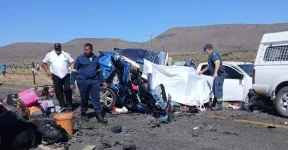
A devastating collision involving three vehicles turned a quiet morning into a scene of absolute carnage on the outskirts of Mthatha. Nine people lost their lives and eight others suffered injuries when a minibus taxi, a Toyota Avanza, and a bakkie smashed into each other near Beyele on the R61. This horrific pile-up occurred during the final hours of the year as travelers were making their way through the Eastern Cape for holiday gatherings. Premier Lubabalo Oscar Mabuyane expressed deep sorrow over the loss of life, urging motorists to exercise extreme caution to prevent further heartbreak on the highways. Emergency responders from ALS Paramedics and other rescue services arrived to find victims trapped inside the mangled metal, requiring specialized tools to cut them free before survivors could be rushed to nearby hospitals and clinics for urgent medical care.
The impact of the crash was so severe that seven people died almost instantly, with the death toll eventually climbing as more victims succumbed to their wounds. Early reports suggest that the minibus taxi and the passenger car collided head-on before the bakkie became entangled in the wreckage on a stretch of road known for its tricky curves and high traffic volumes. While the weather remained clear during the incident, investigators are looking into human factors like speeding or dangerous overtaking maneuvers, which frequently plague this specific route connecting Engcobo and Cofimvaba. The road remained closed for several hours as cleanup crews worked to remove debris, and police gathered evidence to determine the exact sequence of events that led to the tragedy.
Provincial leaders like Transport MEC Xolile Nqatha and spokesperson Unathi Binqose described the event as a heartbreaking blow to the community at a time meant for celebration. The government has pledged to provide counseling services and support for the grieving families who now face unexpected funeral costs and medical bills. This specific disaster adds to a grim regional tally that saw dozens of fatalities in the weeks leading up to the new year, reflecting a national struggle with road safety during the peak travel season. Authorities are calling for a collective effort from all drivers to take responsibility for their actions behind the wheel to stop the cycle of violence on the tarmac.
Official statistics show a worrying increase in fatal accidents across the province compared to previous cycles, with over fifteen hundred lives lost nationwide during the recent holiday period. Factors such as driver exhaustion, intoxicated operating, and overloaded public transport vehicles contribute to the high risk on rural roads, where infrastructure often struggles to handle the twenty percent surge in traffic. Moving into the new year, the provincial administration plans to ramp up checkpoints and enforcement measures to catch reckless operators before they cause another catastrophe. The hope remains that the lessons learned from this disaster will lead to better infrastructure and stricter adherence to safety protocols for every person using the highway network.
The impact of the crash was so severe that seven people died almost instantly, with the death toll eventually climbing as more victims succumbed to their wounds. Early reports suggest that the minibus taxi and the passenger car collided head-on before the bakkie became entangled in the wreckage on a stretch of road known for its tricky curves and high traffic volumes. While the weather remained clear during the incident, investigators are looking into human factors like speeding or dangerous overtaking maneuvers, which frequently plague this specific route connecting Engcobo and Cofimvaba. The road remained closed for several hours as cleanup crews worked to remove debris, and police gathered evidence to determine the exact sequence of events that led to the tragedy.
Provincial leaders like Transport MEC Xolile Nqatha and spokesperson Unathi Binqose described the event as a heartbreaking blow to the community at a time meant for celebration. The government has pledged to provide counseling services and support for the grieving families who now face unexpected funeral costs and medical bills. This specific disaster adds to a grim regional tally that saw dozens of fatalities in the weeks leading up to the new year, reflecting a national struggle with road safety during the peak travel season. Authorities are calling for a collective effort from all drivers to take responsibility for their actions behind the wheel to stop the cycle of violence on the tarmac.
Official statistics show a worrying increase in fatal accidents across the province compared to previous cycles, with over fifteen hundred lives lost nationwide during the recent holiday period. Factors such as driver exhaustion, intoxicated operating, and overloaded public transport vehicles contribute to the high risk on rural roads, where infrastructure often struggles to handle the twenty percent surge in traffic. Moving into the new year, the provincial administration plans to ramp up checkpoints and enforcement measures to catch reckless operators before they cause another catastrophe. The hope remains that the lessons learned from this disaster will lead to better infrastructure and stricter adherence to safety protocols for every person using the highway network.