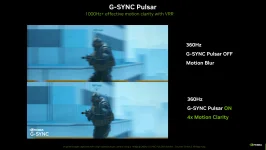
NVIDIA's latest play is fixing motion blur instead of chasing higher numbers. They announced G-SYNC Pulsar, a new monitor tech aimed at competitive gamers. The whole idea is to make fast motion look clearer by changing how the screen's backlight works. Normally, an LCD screen refreshes its pixels line by line while the backlight stays on, which causes blur during those transitions. Pulsar uses a rolling backlight that flashes in sync with the refresh, only lighting up each section after the pixels have settled. NVIDIA claims this makes a huge difference in motion clarity, cutting down on smearing during quick turns or fast action in games like Counter-Strike 2.
The first monitors getting this tech will be 27-inch panels with a 1440p resolution and a 360Hz refresh rate. Four companies are making them: Acer, AOC, ASUS, and MSI. These displays will also include a feature called G-SYNC Ambient Adaptive Technology. That basically lets the screen adjust its brightness and color tone automatically based on the room's lighting, going brighter and cooler in well-lit spaces and dimmer with warmer tones in the dark.
Pricing for these new monitors will start at five hundred ninety-nine dollars. NVIDIA's move here signals a shift in marketing spiel for high-end gaming gear. Instead of just hyping faster refresh rates, they are focusing on perceived sharpness during movement, trying to solve a visual issue that still bugs sweaty esports teens. The monitors are supposed to be available soon.
The first monitors getting this tech will be 27-inch panels with a 1440p resolution and a 360Hz refresh rate. Four companies are making them: Acer, AOC, ASUS, and MSI. These displays will also include a feature called G-SYNC Ambient Adaptive Technology. That basically lets the screen adjust its brightness and color tone automatically based on the room's lighting, going brighter and cooler in well-lit spaces and dimmer with warmer tones in the dark.
Pricing for these new monitors will start at five hundred ninety-nine dollars. NVIDIA's move here signals a shift in marketing spiel for high-end gaming gear. Instead of just hyping faster refresh rates, they are focusing on perceived sharpness during movement, trying to solve a visual issue that still bugs sweaty esports teens. The monitors are supposed to be available soon.