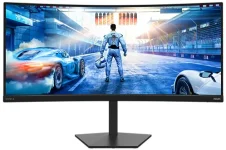
Philips Evnia 36M4C5500P pairs an ultrawide format with high speed. This 36-inch curved gaming monitor uses a 1500R Fast VA panel at 3440 x 1440 resolution. Native refresh hits 240Hz while an overclock mode pushes toward 260Hz for competitive play. DisplayHDR 400 certification accompanies peak HDR brightness reaching 500 nits according to specs.
Contrast ratio sits at 4000:1 with 350 nit SDR and 450 nit HDR ratings. Response times list 0.3ms MPRT plus 1ms GtG, but these measure different things entirely. Color coverage claims 95% DCI-P3 alongside sRGB mode Delta E under two. Independent testing must verify factory calibration and uniformity across the larger surface area.
Motion Blur Reduction Sync works simultaneously with adaptive refresh technologies here. Practical image quality depends on flicker behavior and brightness during variable rate operation. Two HDMI 2.1 ports join one DisplayPort 1.4 connection for video input. Users should confirm uncompressed signal support since DP 1.4 has bandwidth limits at high refresh rates.
Pushing 3440 x 1440 pixels at 260 frames requires serious GPU horsepower. Competitive titles or less demanding games benefit most from maximum refresh capability. Visually intense AAA experiences likely need upscaling or reduced settings to maintain smoothness. Desk depth matters greatly given the physical size exceeds typical 34-inch ultrawides.
Retail pricing remains unannounced alongside regional availability details. The real value proposition hinges on whether 260Hz overclock provides tangible gains over native 240Hz performance. Buyers should wait for third-party motion clarity and HDR validation before committing. This release combines existing tech rather than introducing novel panel innovations.