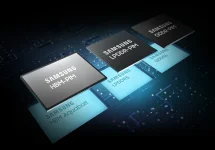
Samsung Electronics announced substantial price increases across its memory product lines, with DRAM costs rising 30 percent and NAND flash climbing between 5 and 10 percent. Supply constraints drove these adjustments as manufacturers reduced production of legacy components while cloud service providers increased their procurement volumes. The price hikes affect LPDDR4X, LPDDR5, and LPDDR5X memory modules, as well as eMMC and UFS flash storage products.
Competitors Micron Technology and SanDisk implemented similar strategies, raising their rates by 20 to 30 percent and 10 percent, respectively. Market dynamics shifted as artificial intelligence computers and advanced smartphones demand newer memory standards, leaving older DDR4 products with reduced manufacturing capacity and 50 percent higher costs. High Bandwidth Memory production receives priority for AI accelerators, further tightening consumer memory availability. Samsung maintains leadership positions with 32.7 percent of the DRAM market and 32.9 percent of NAND flash sales while accelerating LPDDR6 development.
Competitors Micron Technology and SanDisk implemented similar strategies, raising their rates by 20 to 30 percent and 10 percent, respectively. Market dynamics shifted as artificial intelligence computers and advanced smartphones demand newer memory standards, leaving older DDR4 products with reduced manufacturing capacity and 50 percent higher costs. High Bandwidth Memory production receives priority for AI accelerators, further tightening consumer memory availability. Samsung maintains leadership positions with 32.7 percent of the DRAM market and 32.9 percent of NAND flash sales while accelerating LPDDR6 development.