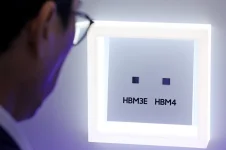
Man, the memory game is wild right now. Samsung somehow clawed its way back in the HBM race after a rough start to the year, actually beating out Micron's market share last quarter. We're talking about their High Bandwidth Memory stuff, the chips that feed data-hungry AI processors. They finally got their tech, specifically HBM3 and the newer HBM3E, certified by the big dogs. Both AMD and NVIDIA are now customers, which is a huge deal after Samsung was lagging behind SK Hynix for a while. Counterpoint Research data showed Samsung grabbed 22 percent of the market in Q3, which is still behind SK hynix but finally ahead of Micron.
This whole comeback story is kinda funny because Samsung has massive production capacity, but totally fumbled initially. They completely revamped their internal approach after failing to get NVIDIA's approval early on. The turnaround started when AMD picked up its HBM3E for its own products. Then, later on, they managed to lock in NVIDIA too, not just for HBM3E but also for their upcoming HBM4 memory. That next-gen HBM4 is supposedly the fastest out there right now, which gives them a real edge.
Looking forward, the whole DRAM sector is slammed with demand that even the three major players can't meet. Samsung's position looks way stronger now, though, especially with those HBM4 chips ready to go. They're apparently willing to be aggressive on pricing to win more business. The real proof will come early next year when new AI accelerator platforms, like AMD's Instinct MI400 series and NVIDIA's Rubin architecture, start hitting the market using these advanced memory stacks. That's when we'll see if this comeback actually sticks.
This whole comeback story is kinda funny because Samsung has massive production capacity, but totally fumbled initially. They completely revamped their internal approach after failing to get NVIDIA's approval early on. The turnaround started when AMD picked up its HBM3E for its own products. Then, later on, they managed to lock in NVIDIA too, not just for HBM3E but also for their upcoming HBM4 memory. That next-gen HBM4 is supposedly the fastest out there right now, which gives them a real edge.
Looking forward, the whole DRAM sector is slammed with demand that even the three major players can't meet. Samsung's position looks way stronger now, though, especially with those HBM4 chips ready to go. They're apparently willing to be aggressive on pricing to win more business. The real proof will come early next year when new AI accelerator platforms, like AMD's Instinct MI400 series and NVIDIA's Rubin architecture, start hitting the market using these advanced memory stacks. That's when we'll see if this comeback actually sticks.