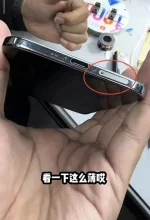
You can brute-force a physical SIM into the iPhone Air, but it involves surgery, a voided warranty, and pure spite toward Apple’s design philosophy.
Why the iPhone Air ditched the SIM tray
Why the iPhone Air ditched the SIM tray
- Apple made the iPhone Air ultra-thin
- That slim body basically forced an eSIM-only setup
- Physical SIM hardware takes up space that Apple was not willing to give
- The move also nudged broader eSIM adoption, even in China
- Some hardware tinkerers were not having it
- They found a way to cram a physical SIM back in
- This is not a setting, accessory, or official mod
- It is a straight-up internal hardware replacement
- The stock vibration motor has to go
- That motor is what gives the iPhone Air its haptic feedback
- No removal, no room, end of story
- A much smaller vibration motor goes in first
- It barely covers basic haptics, nothing fancy
- A physical SIM tray and slot assembly takes the rest of the space
- That assembly is what makes the SIM actually usable
- Your warranty is instantly toast
- Apple will not even pretend to help you afterward
- Resale value drops hard
- Battery impact is unknown and probably not great
- A smaller vibration motor might save a little power
- SIM tray hardware adds new electrical and spatial load
- Net result could be neutral or negative
- On an already tiny battery, that matters
- Definitely not regular users
- You need disposable income
- You need technical skills
- You need to not care about long-term value
- Pure curiosity
- Bragging rights
- A personal vendetta against eSIM-only phones
- Turning an iPhone Air into a Frankenstein flex
- Yes, it works
- No, it is not practical
- Apple did not design the phone for this
- This is a vanity project, not a solution