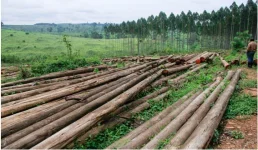
Uganda's forestry industry is transitioning toward managed plantation systems designed to satisfy commercial timber requirements while protecting native woodlands that lose over 122,000 hectares annually. Food and Agriculture Organization coordinator Zainabu Kakungulu explained that staggered harvesting blocks allow continuous production cycles rather than complete clearances, with European Union funding supporting 32,000 hectares under rotation management across Hoima, Kiboga, Mubende and Nakasongola regions, linking more than 200 growers to processing facilities.
Kirangwa Investments operates a 778-acre site in Mubende where director Godfrey Bahiigwa maintains Forest Stewardship Council certification through selective thinning practices and natural corridor preservation. The operation employs up to 250 workers during peak seasons while receiving technical assistance and equipment financing totaling approximately 41 billion shillings aimed at replacing imports with domestic production.
Between 70 and 100 small enterprises have accessed business training and machinery upgrades to reduce waste and improve output from carefully calculated plantation yields, though experts caution that monoculture forests require careful stewardship to prevent biodiversity loss and soil deterioration.
Kirangwa Investments operates a 778-acre site in Mubende where director Godfrey Bahiigwa maintains Forest Stewardship Council certification through selective thinning practices and natural corridor preservation. The operation employs up to 250 workers during peak seasons while receiving technical assistance and equipment financing totaling approximately 41 billion shillings aimed at replacing imports with domestic production.
Between 70 and 100 small enterprises have accessed business training and machinery upgrades to reduce waste and improve output from carefully calculated plantation yields, though experts caution that monoculture forests require careful stewardship to prevent biodiversity loss and soil deterioration.