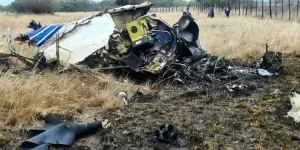
Wicknell Chivayo's fatal helicopter crash is still under investigation, with Zimbabwean aviation officials set to share their first findings. The Civil Aviation Authority of Zimbabwe (CAAZ) is examining evidence from the wreck at Kudenga Farm in Waddilove, near Marondera, as experts try to determine why the aircraft went down.
One key piece of evidence is the helicopter's black box, which investigators reportedly recovered without damage. Its records could help experts check how the aircraft was flying, what the crew said over the radio, and what conditions they faced before impact.
Foreign aviation specialists have joined the inquiry, while the damaged aircraft has been moved to Charles Prince Airport for closer inspection. The first report should offer some early details, but a full account of the cause may require more work.
The aircraft was a Bell 430, registered as Z-PED, and belonged to Valley Seeds Private Limited. Chivayo had been flying toward Harare from Gandami village in Chivhu, Chikomba District, with the route taking him through the Marondera area.
Five people lost their lives in the tragedy. They were Chivayo, his wife Lucy Muteke, her aide Sanelisiwe Magagula, and pilots Captain Calvin Soda and Captain Courage Mutavirwa. No one aboard survived.
CAAZ chief George Mashababe has shared one early detail from the scene. The damage appeared to suggest that the tail made contact with the earth before the rest of the aircraft. Fuel then reportedly leaked and caught fire, with nearby grass also burning.
But that observation does not explain what caused the helicopter to fall. Investigators still need to work out what happened before it struck the ground and whether any mechanical, human, or environmental factors played a role.
Bad weather has come up as one possible factor. There has been talk of a dark cloud reducing visibility and leaving the pilot unable to judge the aircraft's position correctly. That type of confusion is known as spatial disorientation and can be deadly in flight.
Still, no official finding has linked that condition to the crash. The weather theory remains unconfirmed, and investigators have yet to establish the cause.