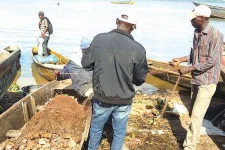
Activists see Uganda's fishing reform plan as just another political facade. Groups called out the government this week, demanding real community control over lake landing sites instead of cosmetic changes. This came after the president's late December order to dissolve abusive committees and the notorious Fisheries Protection Unit. Millions depend on these lakes for food and jobs.
The directive followed years of documented rights violations. Advocates warn that simply forming new committees changes nothing without genuine power shifts. They suspect a pre-election stunt. One director stressed the need for action within fifteen days, not vague three-month timelines, to prove serious intent.
Abuses are rampant around oil projects on Lake Albert. A report detailed military-enforced payments for fishing access and arbitrary arrests near the Kingfisher site. Operations there are run by CNOOC with TotalEnergies and a state company. These firms never responded to formal allegations.
Earlier documentation showed a pattern of coercion. Communities faced pressured land sales and intimidation from oil developments. Critics were harassed. This environment of fear worsened existing management failures on the water.
A controversial proposal involves letting investors sit on the new committees. Activists fiercely oppose this, arguing that oil companies' profit goals will crush community rights. They say it guarantees further erosion of cultural practices and silence for dissent.
Their recommendations are straightforward. New committees need transparent community ratification. Binding safeguards must protect land and culture from investor influence. Military units should be removed from landing sites entirely.
Capacity building for community reps is non-negotiable. They need training in governance and negotiation. Full disclosure of all investor deals is required, subject to independent review. The executive director of one group stated that indigenous voices must be decisive, not just heard.
Without these steps, the cycle repeats. Economic coercion and elite capture will continue marginalizing fishing livelihoods. The current moment tests whether reforms are real or just another empty gesture.
The directive followed years of documented rights violations. Advocates warn that simply forming new committees changes nothing without genuine power shifts. They suspect a pre-election stunt. One director stressed the need for action within fifteen days, not vague three-month timelines, to prove serious intent.
Abuses are rampant around oil projects on Lake Albert. A report detailed military-enforced payments for fishing access and arbitrary arrests near the Kingfisher site. Operations there are run by CNOOC with TotalEnergies and a state company. These firms never responded to formal allegations.
Earlier documentation showed a pattern of coercion. Communities faced pressured land sales and intimidation from oil developments. Critics were harassed. This environment of fear worsened existing management failures on the water.
A controversial proposal involves letting investors sit on the new committees. Activists fiercely oppose this, arguing that oil companies' profit goals will crush community rights. They say it guarantees further erosion of cultural practices and silence for dissent.
Their recommendations are straightforward. New committees need transparent community ratification. Binding safeguards must protect land and culture from investor influence. Military units should be removed from landing sites entirely.
Capacity building for community reps is non-negotiable. They need training in governance and negotiation. Full disclosure of all investor deals is required, subject to independent review. The executive director of one group stated that indigenous voices must be decisive, not just heard.
Without these steps, the cycle repeats. Economic coercion and elite capture will continue marginalizing fishing livelihoods. The current moment tests whether reforms are real or just another empty gesture.