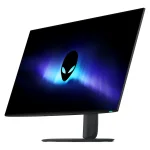
Alienware's AW3226Q 4K OLED monitor has hit the US market at $699.99, with a flat screen and a 165 Hz refresh rate. The new 32-inch model aims to give gamers high-end OLED visuals at a price that sits below many older rivals.
At its core is a 31.5-inch tandem OLED panel with 3840 × 2160 pixels. Instead of one light-emitting layer, this tech uses two, which can help boost brightness while easing the load on each layer. That could help with long-term wear, though actual lifespan will depend on use.
Another neat detail is the RGB stripe pixel layout. Some past OLED screens used a triangular pattern that could leave fine text with odd color edges. Alienware's new layout aims to make small fonts and desktop icons look cleaner, which is handy for work as well as games.
HDR support covers Dolby Vision, regular HDR, and VESA DisplayHDR True Black 400. The last rating sets a 400-nit peak target with deep blacks. It is not the brightest HDR class out there, but OLED's contrast remains a key draw.
Gamers get a 165 Hz ceiling, which is plenty for smooth play but falls short of the 240 Hz found on some rival screens. Samsung's Odyssey OLED G8 is one such option. The real question is whether a PC can push enough frames at full 4K to make use of those extra refresh cycles.
With a midrange graphics card, hitting 165 fps in heavy games could be tough. A high-end GPU or upscaling tools such as DLSS and FSR may help. For some buyers, a 120 Hz output could be more practical than chasing the panel's limit.
Connectivity is fairly basic. There are two HDMI 2.1 sockets and one DisplayPort input, giving users room for a PC and other devices. No wider port list was given in the launch details.
As for the price, the $699.99 tag puts this model below the launch cost of Alienware's older AW3225QF and several past 4K OLED displays. Some comparable screens were selling for over $1,000 in prior years, which makes this a notable shift.
One perk is the three-year burn-in warranty. OLED panels can still face wear from static menus, taskbars, and other fixed screen items, and that coverage helps reduce the risk of a costly panel issue.
There is a catch for buyers outside America. European pricing has not been confirmed in the available details, and local warranty rules may differ. For US shoppers, though, the AW3226Q offers a clear mix of 4K resolution, OLED contrast, and a fairly accessible entry price.