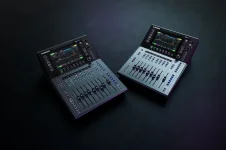
Allen & Heath has added the Qu-3 and Qu-3D to its digital mixer range. These are the smallest models in the Qu family yet, with both built for jobs where desk space is tight but audio control still matters.
The pair targets live gigs, home studios, broadcast work, corporate AV, and fixed sound setups. Each unit uses the same core tech as its larger siblings, with XCVI processing handling the audio.
Here's what users get. Both mixers support 36 inputs, made up of 32 mono channels that can be linked and two stereo channels. They also pack 12 mixes, four matrices, and six effects engines, each with its own stereo return.
Connectivity is quite packed for the size. A 128×128 SLink connection works with the brand's Everything I/O hardware, while a 32×32 USB-C interface handles audio transfer to computers.
Recording has a few paths as well. Users can save multitrack audio straight to an SD card or handle stereo playback and capture through USB-A. That gives small setups ways to work without a large rack of gear.
The Qu-3D has one clear extra. Its built-in Dante port handles 16 channels in each direction, and an optional upgrade raises that count to 32×32. The standard Qu-3 does not have that integrated Dante feature.
Audio quality gets the same hardware treatment as the rest of the series. Both units use Allen & Heath microphone preamps and 96 kHz converters, with the brand aiming to keep sound quality consistent across the range.
And there are tools meant to cut down on manual work. Feedback Assist helps deal with unwanted feedback, while Gain Assist helps set input levels. A 32-channel Automatic Microphone Mixer handles speech setups with many open microphones.
The physical layout stays simple. An 8+1 fader setup gives users hands-on control without taking up much desk room, which may appeal to people working in small production booths or home recording spaces.
Senior product manager Keith Johnson says the goal was to keep the main Qu features intact while making the hardware far smaller. His team focused on retaining FPGA processing, flexible recording, and physical controls rather than stripping the mixers back.
Both models bring the Qu platform into spaces that may not suit a larger desk. The mix of Dante on the Qu-3D, local recording, and digital routing gives buyers a few ways to build a setup around their needs.
Pricing remains a question, though. Allen & Heath has not given a cost or confirmed when either mixer will go on sale.