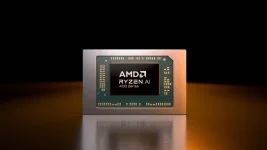
AMD's new laptop chips are just a mild refresh with a bigger number. The company launched its Ryzen AI 400 series, codenamed Gorgon Point, which is basically an optimized version of last year's Strix Point design. They squeezed out minor gains, like a ten to twelve percent performance bump, by tweaking clock speeds and supporting faster memory. The top model, the Ryzen AI 9 HX 475, still uses twelve Zen 5 cores and an RDNA 3.5 graphics unit, but now boosts up to 5.2 gigahertz. The integrated GPU can also hit higher clock speeds, and the NPU gets a small uplift to 60 AI TOPS.
The lineup includes seven different processors, with core counts ranging from four to twelve. Support for faster LPDDR5x memory is a noted upgrade. AMD claims leadership in NPU performance over Intel's latest chips, citing better scores in an AI vision test. For general productivity and creative tasks, they tout significant leads in applications like Blender. Gaming performance from the integrated graphics is said to be about twelve percent faster on average than the previous generation.
Battery life claims are extensive, with promises of up to twenty-four hours for video playback. These chips will appear in a variety of laptops, mini PCs, and all-in-ones from major manufacturers. A separate Pro series for business devices is also planned for release soon. The whole launch feels like a marketing refresh more than a major architectural leap, with most improvements coming from slight optimizations rather than new technology.
The lineup includes seven different processors, with core counts ranging from four to twelve. Support for faster LPDDR5x memory is a noted upgrade. AMD claims leadership in NPU performance over Intel's latest chips, citing better scores in an AI vision test. For general productivity and creative tasks, they tout significant leads in applications like Blender. Gaming performance from the integrated graphics is said to be about twelve percent faster on average than the previous generation.
Battery life claims are extensive, with promises of up to twenty-four hours for video playback. These chips will appear in a variety of laptops, mini PCs, and all-in-ones from major manufacturers. A separate Pro series for business devices is also planned for release soon. The whole launch feels like a marketing refresh more than a major architectural leap, with most improvements coming from slight optimizations rather than new technology.