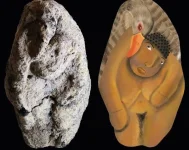
A 12,000-year-old clay figurine discovered at the Nahal Ein Gev II site in northern Israel portrays a woman interacting with a goose, which researchers interpret as one of the world's earliest known mythological scenes. According to a study led by Hebrew University of Jerusalem archaeologist Laurent Davin, the artifact represents the oldest-known naturalistic depiction of a woman from Southwest Asia and the earliest art showing human-animal interaction.
The figurine, found in a stone structure at a prehistoric Natufian village, shows a crouching woman with a goose in a mating posture on her back. Archaeologist Leore Grosman suggested the scene likely symbolizes a mating between a human and an animal spirit, a theme common in animistic belief systems. Anthropologist Natalie Munro added that such imagery traditionally symbolizes fertility or spiritual concepts rather than depicting literal events.
Crafted from dried and fired clay with traces of red pigment, the object demonstrates advanced artistic techniques for its time, using light and shadow for depth. Researchers believe it may have been part of a staged installation for ritual or storytelling purposes, reflecting how the shift to a sedentary lifestyle influenced symbolic expression and social structures.
The figurine, found in a stone structure at a prehistoric Natufian village, shows a crouching woman with a goose in a mating posture on her back. Archaeologist Leore Grosman suggested the scene likely symbolizes a mating between a human and an animal spirit, a theme common in animistic belief systems. Anthropologist Natalie Munro added that such imagery traditionally symbolizes fertility or spiritual concepts rather than depicting literal events.
Crafted from dried and fired clay with traces of red pigment, the object demonstrates advanced artistic techniques for its time, using light and shadow for depth. Researchers believe it may have been part of a staged installation for ritual or storytelling purposes, reflecting how the shift to a sedentary lifestyle influenced symbolic expression and social structures.