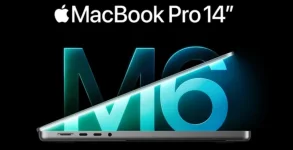
Apple's M6 refresh brings more power to the 14-inch MacBook Pro and 24-inch iMac, but buyers face some odd trade-offs. Both machines are due to hit stores, with faster chips, fresh specs, and a few price hikes.
For the MacBook Pro, the old M5 had ten CPU cores and ten GPU cores. The M6 bumps each count to 12. Buyers get three RAM choices at 16GB, 24GB, or 32GB. Not bad, though the real gains depend on which version they pick.
Here's the catch with RAM speed. The 16GB option stays at 153GB/s, while either larger option gets 170GB/s. Drive space starts at 1TB and goes as high as 4TB, with 2TB in between. The 512GB tier is gone.
Visually, Apple has left the laptop alone. Same case, screen, and port layout. The firm still rates its battery at 24 hours for streamed video. Yet the cheapest M6 unit costs €2,329, a €100 jump from the M5's €2,229 price.
Anyone after an M6 Pro or M6 Max is out of luck for the moment. Neither chip has a MacBook Pro version on sale or on the official roadmap yet. The M5 Pro and M5 Max remain the options for buyers who need those higher-end tiers.
Meanwhile, the iMac takes a bigger leap in chip age, as Apple jumps right past M5 from the older M4. At €1,819, the cheapest 24-inch desktop packs ten CPU cores, ten GPU cores, 16GB RAM, and a 256GB drive. It also has a pair of Thunderbolt 4 sockets.
Spending €2,019 gets the iMac with 12 CPU cores, 12 GPU cores, and four Thunderbolt sockets. Its screen stays as it was, but the N1 chip adds support for Wi-Fi 7 and Bluetooth 6. That is a welcome change for anyone with newer network gear.
One weird bit is the Ethernet setup. A wired 2.5Gb link costs €35 extra, and the base iMac relies on wireless access unless a buyer adds that option. Even the keyboard has tiers. The cheap unit gets no Touch ID, while €80 buys fingerprint access and a number pad.
At least the 12-core desktop ships with a Touch ID keyboard, though it lacks the number pad. RAM and drive choices for that model were not spelled out in the supplied specs.
As for speed, an M6 scored roughly 11% above M5 in the single-core Cinebench 2026 test. Its multi-core result rose by 56%. Those figures came from a separate Mac comparison, not a full set of laptop benchmarks released by Apple.
On the graphics side, Apple puts the M6's AI compute gain at up to 25% and its render boost at up to 30%. The firm also rates local AI work on its new iMac at as much as five times the pace of M4.
Still, those are task-based claims rather than a promise that every app will run at those speeds. Real gains will vary with the software and the work each machine has to do.