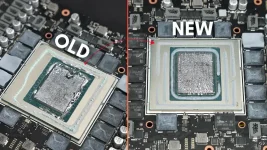
ASUS finally stopped gambling with our GPUs and fixed their messy thermal application. The company tweaked the retail ROG Matrix RTX 5090 after everyone roasted them over shady liquid metal quality. Reports of shipment pauses forced their hand to implement optimizations rather than risking short circuits on expensive hardware.
Roman Hartung cracked open a retail unit to confirm that the situation looks significantly less sketchy than previous samples. Liquid metal conducts electricity, meaning migration outside the contact area fries components instantly. High-power cards facing thermal cycling cannot afford sloppy containment that leads to catastrophic failure.
Engineers added conventional paste barriers around the perimeter to keep conductive material inside specific zones. This structured layout uses containment lanes with cutouts to handle thermal expansion. It looks like a deliberate process target designed to prevent creep rather than some improvised factory disaster.
Analysis suggests the compound contains silicon oil to adjust viscosity for better consistency. Factories likely use a printing method to deposit droplets exactly where needed. Tuning wetting characteristics helps automated systems apply the interface repeatedly without creating uneven spreads.
FurMark stress testing pushed the board near 800 watts while keeping temperatures lower than before. Fan behavior also received adjustments during these revisions. Enthusiasts noted extras like BTF adapters and WireView Pro concepts, but the real win is engineered mitigation of failure modes.
Roman Hartung cracked open a retail unit to confirm that the situation looks significantly less sketchy than previous samples. Liquid metal conducts electricity, meaning migration outside the contact area fries components instantly. High-power cards facing thermal cycling cannot afford sloppy containment that leads to catastrophic failure.
Engineers added conventional paste barriers around the perimeter to keep conductive material inside specific zones. This structured layout uses containment lanes with cutouts to handle thermal expansion. It looks like a deliberate process target designed to prevent creep rather than some improvised factory disaster.
Analysis suggests the compound contains silicon oil to adjust viscosity for better consistency. Factories likely use a printing method to deposit droplets exactly where needed. Tuning wetting characteristics helps automated systems apply the interface repeatedly without creating uneven spreads.
FurMark stress testing pushed the board near 800 watts while keeping temperatures lower than before. Fan behavior also received adjustments during these revisions. Enthusiasts noted extras like BTF adapters and WireView Pro concepts, but the real win is engineered mitigation of failure modes.