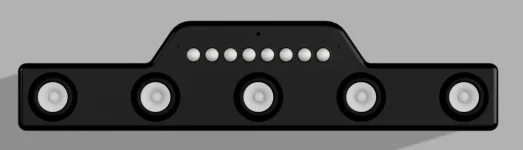
Audioscenic is working on a speaker system that plays binaural spatial audio without the need for headphones or a full surround setup. The UK firm wants to give music producers a simpler way to hear immersive mixes, using AI-based tech that has already made its way into gear from Razer, Dell, and Acer.
The main issue is access. Dolby Atmos has become a common part of film, TV, and game sound work, while music producers face more demand for immersive tracks. Yet a lot of studios still make a stereo mix first and deal with spatial sound later, in part because the right speakers and room setup can cost a fair bit.
Apple has helped make the format easier to try. Its music service has put a lot of focus on spatial tracks, while AirPods can use custom HRTF profiles to tune playback for each user. Logic Pro also has built-in tools that let producers test spatial mixes with headphones, even without a room full of speakers.
But Natalya Mamcarczyk, an audio engineer and educator who works with Audioscenic, thinks the hardware side still needs work. She points out that basic music production has become far easier to access, while immersive audio can still demand costly studio gear and a lot of setup.
Her work with the firm looks at how binaural sound could become part of making music right from the start. Rather than treat immersive audio as a task for the final mix, she wants producers to test how sounds sit around the listener while they write and arrange tracks.
There's also a format issue. Several spatial audio systems use their own ways to handle sound, which can make it hard to move work between them. Binaural playback offers a shared option, as common immersive formats can render their output into a two-ear signal.
On the hardware front, Audioscenic has built a device that uses a method close to beamforming. It aims sound toward the listener in a way that can create a binaural effect from speakers. That could let users hear spatial cues without wearing headphones or setting up a full multichannel room.
Jake Hollebon, the firm's VP of Research & Audio, sees a gap between personal audio and large speaker rigs. Headphones do the job for many people, but they don't suit every task. His team wants a practical way to play immersive sound in open air, with far less room tuning and wiring.
And the firm isn't keen to add yet another closed audio format. It plans to work with binaural mixes made from existing systems. That could cover a wide range of content without forcing users to change how they make or deliver their music.
Most home listeners don't have a 7.1.4 speaker rig, either. Many hear immersive tracks through headphones, TV soundbars, or basic speaker systems. Audioscenic sees that gap as a chance to bring a more useful spatial playback option to studios and homes alike.
There's no firm product price or release plan in the details shared yet. The company has hinted that more hardware plans are on the way, but whether its approach can stand in for a full Dolby Atmos monitoring room remains an open question.