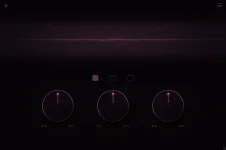
AngelicVibes now has three AV Essentials FX plug-ins aimed at pitch, stereo width, and dynamics rather than one oversized multi-effect. Pitchshifter arrived first, Spread followed, and Maximillion became the third release in the line.
Each plug-in keeps the control count low, gives you three processing types, and expects you to choose a character before fine-tuning it. Maximillion's place in AV Essentials FX makes more sense as part of that pattern than as a standalone attempt to cover every mixing job.
The important difference is what each plug-in can change. Pitchshifter moves pitch, Spread changes stereo presentation, and Maximillion reshapes level, transients, saturation, and density. You can stack them, but they are not substitutes for one another.
Semitones handle the large musical move, while cents handle fine-tuning inside one semitone. A cent is one hundredth of an equal-tempered semitone, and cent-based pitch adjustment can be expressed as a precise pitch ratio rather than a vague detune amount. In practice, Pitchshifter can move a loop to a new key area, then trim smaller tuning differences without another device.
Spread tackles a different problem. Type 1 uses adjustable delay for stereo widening, Type 2 adds a tighter pitch-shifted spread, and Type 3 stacks detuned voices with gentle widening. Its third control changes with the selected mode, so the same panel can adjust delay time, detune, or drift.
Maximillion departs from both because it works on dynamics and envelope shape. Type 1 pushes limiting, saturation, and loudness, while Type 2 adds adaptive compression with punch and recovery behavior. Type 3 focuses on compression plus transient shaping.
Its modes matter more than the tiny interface suggests. Studio Shift aims for cleaner everyday use, while Spectral Shift suits vocals, pads, and sustained sounds. Window Shift trades some smoothness for a more classic low-latency movement. Pitchshifter version 1.0.2 revised the first and third modes, reduced latency, and updated the interface.
Spread starts after pitch placement is already acceptable. Type 1 can open a source through delay-based width, Type 2 adds subtle detuned movement, and Type 3 becomes closer to a stacked-voice treatment. A narrow synth can therefore stay on the same notes while occupying more left-right space.
The distinction matters when choosing between Pitchshifter and Spread for a vocal double or melody layer. Pitchshifter changes note height or tuning first, while Spread is designed to change width first. Type 2 in Spread contains pitch movement, but its job is stereo expansion rather than transposing the part.
Those boundaries keep the tools easier to read. If the source is in the wrong key, width will not fix it. If the source sits correctly in pitch but feels too narrow, a semitone control is the wrong starting point.
Type 2 shows the difference clearly. Its Punch control changes hit character, Recovery changes compression behavior and saturation, and the mode carries a built-in high-end lift. Spread might make the same drum loop wider, but it will not perform that kind of envelope and level work.
Type 3 goes further by treating Attack as transient strength rather than compressor attack time. Sustain changes the tail, letting you shorten it below the midpoint or add body and warmth above it. Pitchshifter and Spread do not attempt that job.
Chain order depends on the source rather than the product sequence. You might pitch a sample first, widen it second, then use Maximillion to control the new peaks and body. On another sound, widening after dynamics can preserve a centered punch while adding space around it.
Each plug-in keeps the control count low, gives you three processing types, and expects you to choose a character before fine-tuning it. Maximillion's place in AV Essentials FX makes more sense as part of that pattern than as a standalone attempt to cover every mixing job.
The important difference is what each plug-in can change. Pitchshifter moves pitch, Spread changes stereo presentation, and Maximillion reshapes level, transients, saturation, and density. You can stack them, but they are not substitutes for one another.
The series is built around one problem at a time
Pitchshifter is the most literal of the three. Its main controls are Semitones, Cents, and Mix, while its modes change the method and character of the shift. The current overview names them Studio Shift for cleaner general use, Spectral Shift for smoother sustained material, and Window Shift for a lower-latency, more obviously processed result.Semitones handle the large musical move, while cents handle fine-tuning inside one semitone. A cent is one hundredth of an equal-tempered semitone, and cent-based pitch adjustment can be expressed as a precise pitch ratio rather than a vague detune amount. In practice, Pitchshifter can move a loop to a new key area, then trim smaller tuning differences without another device.
Spread tackles a different problem. Type 1 uses adjustable delay for stereo widening, Type 2 adds a tighter pitch-shifted spread, and Type 3 stacks detuned voices with gentle widening. Its third control changes with the selected mode, so the same panel can adjust delay time, detune, or drift.
Maximillion departs from both because it works on dynamics and envelope shape. Type 1 pushes limiting, saturation, and loudness, while Type 2 adds adaptive compression with punch and recovery behavior. Type 3 focuses on compression plus transient shaping.
Pitchshifter and Spread alter character before loudness
Pitchshifter is useful when the musical identity needs to move without rebuilding the part. A vocal chop can come down several semitones, a loop can be nudged into tune, or a duplicate can be shifted. Mix then brings some of the original signal back.Its modes matter more than the tiny interface suggests. Studio Shift aims for cleaner everyday use, while Spectral Shift suits vocals, pads, and sustained sounds. Window Shift trades some smoothness for a more classic low-latency movement. Pitchshifter version 1.0.2 revised the first and third modes, reduced latency, and updated the interface.
Spread starts after pitch placement is already acceptable. Type 1 can open a source through delay-based width, Type 2 adds subtle detuned movement, and Type 3 becomes closer to a stacked-voice treatment. A narrow synth can therefore stay on the same notes while occupying more left-right space.
The distinction matters when choosing between Pitchshifter and Spread for a vocal double or melody layer. Pitchshifter changes note height or tuning first, while Spread is designed to change width first. Type 2 in Spread contains pitch movement, but its job is stereo expansion rather than transposing the part.
Those boundaries keep the tools easier to read. If the source is in the wrong key, width will not fix it. If the source sits correctly in pitch but feels too narrow, a semitone control is the wrong starting point.
Maximillion begins where the other two stop
Maximillion is the one you reach for when the sound has the right notes and enough stereo space but still lacks impact or density. Controlled peaks can be part of the problem too. Its controls deal with how the sound hits, holds, and clips rather than where it sits in pitch or stereo.Type 2 shows the difference clearly. Its Punch control changes hit character, Recovery changes compression behavior and saturation, and the mode carries a built-in high-end lift. Spread might make the same drum loop wider, but it will not perform that kind of envelope and level work.
Type 3 goes further by treating Attack as transient strength rather than compressor attack time. Sustain changes the tail, letting you shorten it below the midpoint or add body and warmth above it. Pitchshifter and Spread do not attempt that job.
Chain order depends on the source rather than the product sequence. You might pitch a sample first, widen it second, then use Maximillion to control the new peaks and body. On another sound, widening after dynamics can preserve a centered punch while adding space around it.