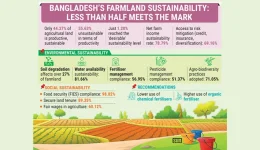
Bangladesh farmers face a crisis that threatens the nation's food future. New government data reveals nearly half the country's farmland cannot produce enough crops to stay healthy. The Bangladesh Bureau of Statistics found only 44 percent of agricultural areas meet basic sustainability standards. Chemical fertilizers have destroyed the natural power of the soil across more than half of all farming areas. Agricultural expert Jahangir Alam warns that urea and other synthetic chemicals have killed the land's ability to grow food naturally.
The Productive and Sustainable Agriculture Survey 2025 shows farmers earn money from their crops on most land. However, the soil quality keeps getting worse each year. Only 1 percent of farmland reaches the best sustainability levels that experts recommend. Environmental problems affect 27 percent of agricultural areas through soil damage. Water supplies remain steady for most farmers, but pesticide use creates ongoing risks.
Social conditions look much better than farming productivity across rural Bangladesh. Nearly 99 percent of farming families have enough food to eat according to official hunger measurements. Most landowners control their property legally and workers earn decent wages. The survey team collected information from farms between January and March of this year. Government officials must create new policies to fix soil health before the damage becomes permanent.
The Productive and Sustainable Agriculture Survey 2025 shows farmers earn money from their crops on most land. However, the soil quality keeps getting worse each year. Only 1 percent of farmland reaches the best sustainability levels that experts recommend. Environmental problems affect 27 percent of agricultural areas through soil damage. Water supplies remain steady for most farmers, but pesticide use creates ongoing risks.
Social conditions look much better than farming productivity across rural Bangladesh. Nearly 99 percent of farming families have enough food to eat according to official hunger measurements. Most landowners control their property legally and workers earn decent wages. The survey team collected information from farms between January and March of this year. Government officials must create new policies to fix soil health before the damage becomes permanent.