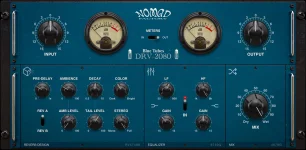
Nomad Factory lists BlueVerb DRV-2080 v4 for macOS 11 or later and Windows 10 or later in 64-bit hosts. Mac users get AU, VST, VST3, and AAX options, while Windows users get VST, VST3, and AAX. The current requirements are much cleaner than the old compatibility information still hanging around on retailer pages.
Version matters here. The Blue Tubes 4.1.0 BlueVerb release is tied to a current compatibility sheet that no longer describes Apple Silicon as a Rosetta-only case. Older listings can still show macOS 10.13, Windows 7, older plug-in combinations, and Intel-first wording, which makes a quick search surprisingly easy to misread.
Native support matters because Rosetta is a translation layer rather than an audio plug-in format. Research into cross-architecture execution shows translated code can carry a performance cost compared with direct host execution, even though the size of that cost depends on the workload. BlueVerb v4 being listed directly for Apple Silicon removes one compatibility question before you even get to the DAW.
Logic Pro users should be looking at the Audio Unit build because Logic hosts third-party Audio Units. Ableton Live on macOS can host VST3 and Audio Units, so either route can fit its supported formats. Pro Tools is the different case because BlueVerb needs its AAX build there, and Nomad Factory specifies Pro Tools 11 or later.
A missing plug-in in Logic is not automatically an Apple Silicon problem. Logic validates third-party Audio Units and exposes their status in its Plug-in Manager, so a failed scan can stop a correctly installed AU from appearing normally. Checking the format and validation status is more useful than reaching for an old Rosetta workaround first.
VST3 is the detail most likely to save you from bad information. Several older BlueVerb product listings still describe Windows support with VST and AAX while omitting VST3 entirely, and some still mention Windows 7. The current v4 requirements supersede those older combinations, so a modern VST3 host on Windows is now part of the official support picture rather than something you need to infer from bundle marketing.
Nomad Factory lists VST and VST3 separately, which matters if your DAW has stopped loading older VST plug-ins. A host with VST3 support does not need the older format merely because an archived BlueVerb page mentions it first. Choosing the format your current DAW actually scans avoids chasing compatibility advice written for a different generation of the plug-in.
AAX also deserves one small distinction. Nomad Factory labels the format AAX Native, so there is no published basis for treating BlueVerb v4 as an AAX DSP plug-in for HDX processing. Pro Tools can still load the Native version on a supported system, but the host format and the DSP-card format are not interchangeable terms.
BlueVerb v4 does not currently advertise CLAP or a standalone application. A host that relies only on CLAP, therefore, should not be assumed to load it, and there is no separate desktop version to launch outside a DAW in the listed formats. The same caution applies to old RTAS references because the current product page lists AAX Native, AU, VST, and VST3 instead.
Authorization is the final compatibility check people tend to discover after installation. Nomad Factory requires an internet connection to authorize BlueVerb and allows authorization on up to three computers. A studio with a main workstation, a laptop, and a second production machine can fit inside that allowance, while an offline machine still needs internet access during the authorization step.
Version matters here. The Blue Tubes 4.1.0 BlueVerb release is tied to a current compatibility sheet that no longer describes Apple Silicon as a Rosetta-only case. Older listings can still show macOS 10.13, Windows 7, older plug-in combinations, and Intel-first wording, which makes a quick search surprisingly easy to misread.
Apple Silicon support is now much clearer
On Mac, Nomad Factory currently specifies macOS 11 or later and either Intel 64-bit or Apple Silicon hardware. It also requires a 64-bit AU, VST, VST3, or AAX host. For somebody moving an older BlueVerb setup onto an M-series Mac, the important change is simple enough to miss because stale store pages may still say the plug-in runs on Apple Silicon through Rosetta.Native support matters because Rosetta is a translation layer rather than an audio plug-in format. Research into cross-architecture execution shows translated code can carry a performance cost compared with direct host execution, even though the size of that cost depends on the workload. BlueVerb v4 being listed directly for Apple Silicon removes one compatibility question before you even get to the DAW.
Logic Pro users should be looking at the Audio Unit build because Logic hosts third-party Audio Units. Ableton Live on macOS can host VST3 and Audio Units, so either route can fit its supported formats. Pro Tools is the different case because BlueVerb needs its AAX build there, and Nomad Factory specifies Pro Tools 11 or later.
A missing plug-in in Logic is not automatically an Apple Silicon problem. Logic validates third-party Audio Units and exposes their status in its Plug-in Manager, so a failed scan can stop a correctly installed AU from appearing normally. Checking the format and validation status is more useful than reaching for an old Rosetta workaround first.
Windows support now includes VST3
The Windows requirement is Windows 10 or later on a 64-bit Intel or AMD system. Nomad Factory lists VST, VST3, and AAX for 64-bit Windows hosts, with Pro Tools 11 or later required for the AAX route. A 32-bit DAW therefore falls outside the current published requirements even if an old BlueVerb installer once worked in one.VST3 is the detail most likely to save you from bad information. Several older BlueVerb product listings still describe Windows support with VST and AAX while omitting VST3 entirely, and some still mention Windows 7. The current v4 requirements supersede those older combinations, so a modern VST3 host on Windows is now part of the official support picture rather than something you need to infer from bundle marketing.
Nomad Factory lists VST and VST3 separately, which matters if your DAW has stopped loading older VST plug-ins. A host with VST3 support does not need the older format merely because an archived BlueVerb page mentions it first. Choosing the format your current DAW actually scans avoids chasing compatibility advice written for a different generation of the plug-in.
AAX also deserves one small distinction. Nomad Factory labels the format AAX Native, so there is no published basis for treating BlueVerb v4 as an AAX DSP plug-in for HDX processing. Pro Tools can still load the Native version on a supported system, but the host format and the DSP-card format are not interchangeable terms.
Your DAW only needs one supported format
Compatibility gets easier once you stop matching DAW names and start matching plug-in formats. Logic needs the AU build. Pro Tools needs AAX. A Windows DAW with VST3 support can use VST3, while a compatible Mac host may give you a choice between AU and VST3 depending on how you organize projects and plug-in folders.BlueVerb v4 does not currently advertise CLAP or a standalone application. A host that relies only on CLAP, therefore, should not be assumed to load it, and there is no separate desktop version to launch outside a DAW in the listed formats. The same caution applies to old RTAS references because the current product page lists AAX Native, AU, VST, and VST3 instead.
Authorization is the final compatibility check people tend to discover after installation. Nomad Factory requires an internet connection to authorize BlueVerb and allows authorization on up to three computers. A studio with a main workstation, a laptop, and a second production machine can fit inside that allowance, while an offline machine still needs internet access during the authorization step.