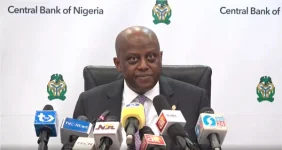
Nigeria's central bank held its benchmark interest rate at 27 percent after policymakers concluded that maintaining the current stance would cement anti-inflation gains and allow earlier tightening measures to permeate the broader economy. Governor Olayemi Cardoso announced that all dozen Monetary Policy Committee members attended the session in Abuja, with a majority backing the decision to preserve existing parameters while tweaking the standing facility corridor and keeping reserve requirements unchanged for commercial and merchant lenders.
Cardoso highlighted seven straight months of cooling price pressures through October 2025, crediting monetary restraint, a firmer naira, robust capital inflows, a current account surplus, and steadier petrol pricing alongside better food availability. He warned that headline inflation remains elevated in double digits despite the favorable trajectory, which prompted the committee to leave policy instruments untouched so previous rate increases can fully work through the system.
The governor pointed to external reserves approaching 47 billion dollars and providing roughly 10 months of import coverage, driven by surging non-oil exports, recovered crude output, rising remittances, and returning portfolio flows as reforms boost transparency and market confidence. He noted inflation has plunged from over 34 percent a year earlier to around 16 percent, signaling a shift from turbulence toward stability that should attract investment and fuel growth.
Cardoso highlighted seven straight months of cooling price pressures through October 2025, crediting monetary restraint, a firmer naira, robust capital inflows, a current account surplus, and steadier petrol pricing alongside better food availability. He warned that headline inflation remains elevated in double digits despite the favorable trajectory, which prompted the committee to leave policy instruments untouched so previous rate increases can fully work through the system.
The governor pointed to external reserves approaching 47 billion dollars and providing roughly 10 months of import coverage, driven by surging non-oil exports, recovered crude output, rising remittances, and returning portfolio flows as reforms boost transparency and market confidence. He noted inflation has plunged from over 34 percent a year earlier to around 16 percent, signaling a shift from turbulence toward stability that should attract investment and fuel growth.