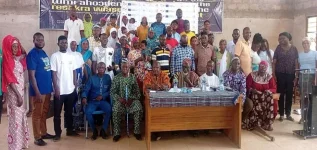
A civic education push in Buipe just put ordinary citizens in the driver's seat on corruption accountability, backed by serious international money.
Central Gonja social audit event basics
Central Gonja social audit event basics
- The Central Gonja District Office of the National Commission for Civic Education ran the engagement in Buipe.
- It fell under the Participation, Accountability and Integrity for a Resilient Democracy programme.
- German Federal Ministry for Economic Cooperation and Development commissioned the initiative, with the European Union and Swiss State Secretariat for Economic Affairs co-financing it.
- German International Cooperation handled the actual implementation on the ground.
- Cletus Y. Suuk framed the exercise as a way to build community ownership of development projects and local policies.
- Weak citizen-state engagement and limited awareness of local government processes were flagged as the core problem.
- Suuk described social auditing as a hands-on, participatory tool for tightening public accountability.
- Gaps in civic engagement, he warned, create breathing room for inefficiencies and corrupt practices to take hold.
- Baba Abukari, Programme Officer at the Commission on Human Rights and Administrative Justice, grounded his remarks in democratic theory.
- His argument was that public officials hold power but remain answerable to the citizens they serve.
- Accountability, in his framing, requires transparency, answerability, and real consequences for duty bearers who fall short.
- Central Gonja District Chief Executive Mahama Fuseini gave updates on Assembly projects and work by MP John Abu Jinapor.
- Participants resolved to prioritise building a public transport terminal in Buipe as their top community project.
- A seven-member social auditing committee got constituted to chase land, funding, and follow-up accountability on the issues raised.