The capital just went through a brutal dry spell that pushed people to the brink. Dar es Salaam faced a severe water shortage, hitting women and girls hardest as they waited hours for a single bucket. The Dar es Salaam Water Supply and Sanitation Authority enacted emergency rationing. Prices for a basic 20-liter bucket soared between 500 and 1,500 shillings. Recent rains provided only temporary relief, underscoring a chronic national crisis.
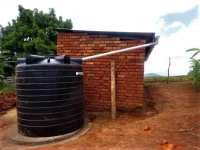
In response, the government is pushing mega-projects like the 335.8 billion shilling Kidunda Dam, currently 40% complete, to supply the coast region. Minister of Water Jumaa Aweso and Regional Commissioner Albert Chalamila are overseeing the effort. Officials also champion rainwater harvesting as a critical, legal household solution under the National Water Policy. The Energy and Water Utilities Regulatory Authority, or EWURA, promotes this to cut costs and ease pressure on systems. They regulate the sector, review tariffs, and inspect water authorities to tackle production issues.
The broader strategy includes updated policies and guidelines for building collection systems from rooftops to dams. Harvesting offers direct benefits: a reliable dry-season reserve, lower bills, reduced erosion, and better hygiene. EWURA advises large institutions like schools and hospitals to adopt the practice. The goal is to combine large infrastructure with community action to build climate resilience, as rising temperatures and erratic rainfall make scarcity a persistent threat to stability and health.
In response, the government is pushing mega-projects like the 335.8 billion shilling Kidunda Dam, currently 40% complete, to supply the coast region. Minister of Water Jumaa Aweso and Regional Commissioner Albert Chalamila are overseeing the effort. Officials also champion rainwater harvesting as a critical, legal household solution under the National Water Policy. The Energy and Water Utilities Regulatory Authority, or EWURA, promotes this to cut costs and ease pressure on systems. They regulate the sector, review tariffs, and inspect water authorities to tackle production issues.
The broader strategy includes updated policies and guidelines for building collection systems from rooftops to dams. Harvesting offers direct benefits: a reliable dry-season reserve, lower bills, reduced erosion, and better hygiene. EWURA advises large institutions like schools and hospitals to adopt the practice. The goal is to combine large infrastructure with community action to build climate resilience, as rising temperatures and erratic rainfall make scarcity a persistent threat to stability and health.