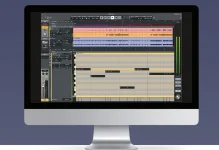
LUNA Free splits a stereo mix into vocals, drums, bass, and other, while LUNA Studio can separate the same file into six stems. More tracks sound automatically better, but the useful difference is narrower. Four stems already handle the jobs most people reach for first, while six become valuable when one instrument buried inside “other” needs its own lane.
The practical value of LUNA 3.0 stem separation tools changes as soon as the material inside that catch-all stem becomes something you actually need to edit. Pulling a vocal for a remix barely cares whether guitar and piano remain grouped together. Replacing a piano part absolutely does.
So the choice is not really four versus six in the abstract. It is broad separation versus finer access to specific accompaniment parts, and the right option depends on what you intend to touch after LUNA finishes the split.
For practice, quick sampling, karaoke-style muting, or pulling a vocal over a new beat, this is already enough control. A drummer can mute the original drums, a bassist can remove the bass part, and a producer can isolate vocals without caring whether the surviving accompaniment contains keys, guitars, strings, or synths.
The “other” stem is where the compromise lives. Everything outside vocals, drums, and bass has to share it, so a piano chord, rhythm guitar, pad, brass stab, and orchestral layer may arrive together instead of as separately editable parts. Dense arrangements make that bucket crowded fast.
Crowding matters only when you need one of those parts on its own. If your goal is simply to strip out the singer or build a drumless practice version, paying for extra categories solves a problem you do not have.
The difference is much more useful for rearranging than for basic muting. You can cut a piano section without chopping up the guitar, process guitar independently, or convert a separated musical part to MIDI later in the Studio workflow. A four-stem result cannot give you the same direct control when both instruments were folded into one accompaniment track.
Remix work is a good example. Suppose the original record has vocals, drums, bass, electric guitar, piano, and a synth pad. Four stems give you three named parts plus a combined guitar-piano-synth bed. Six stems can pull guitar and piano out of that bed, leaving the synth material in the other, which makes new drops, mutes, filtering, and replacement parts far less destructive.
Sampling changes in the same way. A producer hunting for a piano phrase does not necessarily want the guitar playing beside it, and removing that guitar after the fact can be harder than separating both from the start. Six stems are useful because the categories are narrower, not because the number six has some magic sonic advantage.
More output tracks therefore do not guarantee less damage. LUNA Studio gives you finer categories, while the actual cleanliness of a split still depends on the source material and how easily the model can distinguish its parts. A sparse vocal over drums and bass presents a different problem from layered guitars, piano, synths, backing vocals, and long reverb sharing the same stereo image.
Listen before committing to aggressive processing. Solo the stem you care about, check exposed endings and sustained notes, then judge it in the new arrangement rather than obsessing over tiny artifacts heard in isolation. Some residue disappears once drums, bass, and effects return around it.
A final boundary matters. If the original mix printed guitar and piano through shared reverbs, saturation, or bus processing, separation cannot reconstruct the untouched pre-mix tracks behind those effects. The six-way split gives you more handles on the finished mix, not access to the original multitrack session.
The practical value of LUNA 3.0 stem separation tools changes as soon as the material inside that catch-all stem becomes something you actually need to edit. Pulling a vocal for a remix barely cares whether guitar and piano remain grouped together. Replacing a piano part absolutely does.
So the choice is not really four versus six in the abstract. It is broad separation versus finer access to specific accompaniment parts, and the right option depends on what you intend to touch after LUNA finishes the split.
Four stems cover the broad jobs surprisingly well
The four-way layout is vocals, drums, bass, and other. It also mirrors the familiar source grouping used in waveform-based music source separation research, where vocals, bass, drums, and remaining accompaniment are treated as separate targets.For practice, quick sampling, karaoke-style muting, or pulling a vocal over a new beat, this is already enough control. A drummer can mute the original drums, a bassist can remove the bass part, and a producer can isolate vocals without caring whether the surviving accompaniment contains keys, guitars, strings, or synths.
The “other” stem is where the compromise lives. Everything outside vocals, drums, and bass has to share it, so a piano chord, rhythm guitar, pad, brass stab, and orchestral layer may arrive together instead of as separately editable parts. Dense arrangements make that bucket crowded fast.
Crowding matters only when you need one of those parts on its own. If your goal is simply to strip out the singer or build a drumless practice version, paying for extra categories solves a problem you do not have.
Six stems matter when accompaniment needs surgery
LUNA Studio’s six-way split separates vocal, guitar, piano, bass, drums, and other. Guitar and piano stop being buried in the general accompaniment stem, leaving the remaining material behind in “other.”The difference is much more useful for rearranging than for basic muting. You can cut a piano section without chopping up the guitar, process guitar independently, or convert a separated musical part to MIDI later in the Studio workflow. A four-stem result cannot give you the same direct control when both instruments were folded into one accompaniment track.
Remix work is a good example. Suppose the original record has vocals, drums, bass, electric guitar, piano, and a synth pad. Four stems give you three named parts plus a combined guitar-piano-synth bed. Six stems can pull guitar and piano out of that bed, leaving the synth material in the other, which makes new drops, mutes, filtering, and replacement parts far less destructive.
Sampling changes in the same way. A producer hunting for a piano phrase does not necessarily want the guitar playing beside it, and removing that guitar after the fact can be harder than separating both from the start. Six stems are useful because the categories are narrower, not because the number six has some magic sonic advantage.
More stems do not guarantee cleaner audio
Stem separation reconstructs estimates from a finished mix. It does not recover the untouched multitrack files that existed before mixing, so bleed, softened transients, reverberation tails, or strange textures can remain when several sources occupy similar frequencies and timing.More output tracks therefore do not guarantee less damage. LUNA Studio gives you finer categories, while the actual cleanliness of a split still depends on the source material and how easily the model can distinguish its parts. A sparse vocal over drums and bass presents a different problem from layered guitars, piano, synths, backing vocals, and long reverb sharing the same stereo image.
Listen before committing to aggressive processing. Solo the stem you care about, check exposed endings and sustained notes, then judge it in the new arrangement rather than obsessing over tiny artifacts heard in isolation. Some residue disappears once drums, bass, and effects return around it.
A final boundary matters. If the original mix printed guitar and piano through shared reverbs, saturation, or bus processing, separation cannot reconstruct the untouched pre-mix tracks behind those effects. The six-way split gives you more handles on the finished mix, not access to the original multitrack session.