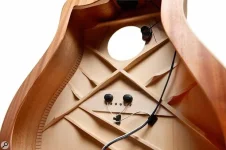
Gibson now fits HiFi DNA across multiple acoustic body shapes, tonewood combinations, cutaway models, and left-handed versions rather than one flagship guitar. The obvious names are still there, with J-45, Hummingbird, SJ-200, and L-00 models getting most of the attention around the launch.
The live range gets more interesting once you scroll past those families. Gibson currently lists an LG-2 50s Original, Dove Original, rosewood versions of the J-45, Hummingbird, and SJ-200, cutaway Hummingbirds, and a left-handed J-45 Rosewood with the same pickup system. Picking a HiFi DNA Gibson therefore starts with the guitar, not the electronics.
HiFi DNA does not flatten those differences into one generic stage instrument. Baggs uses two bridge-plate sensors with separate preamp paths before blending, while the guitar around them can move from a compact small body to a Super Jumbo. The soundboard transducer patent application gives some technical context for the bridge-plate sensing approach, but body size, scale length, bracing, and back-and-side wood still belong to the guitar itself.
The Hummingbird Standard keeps the spruce and mahogany recipe but changes the platform. Its square-shoulder body and Rounded neck give it a different feel before amplification enters the picture. Anyone comparing the two purely because both carry HiFi DNA is skipping the part you actually hold for an entire set.
Move to the Dove and the ingredients change more sharply. The Dove Original uses flame maple back and sides and a 25.5-inch scale, so it is not merely a prettier Hummingbird with the same electronics. Its longer scale and maple construction put it in a different lane even though the pickup controls look familiar from the soundhole.
At the opposite end sits the SJ-200 Standard. Its Super Jumbo body, AAA flame maple back and sides, 25.5-inch scale, and two-piece maple neck make it a physically different proposition from an L-00 before you even plug a cable in. Buying one because both happen to use the same pickup would be a strange way to choose between them.
This is where the Gibson HiFi DNA acoustic system matters without becoming the whole buying decision. The electronics give these guitars a shared amplified platform, but Gibson is putting that platform into instruments designed around very different body sizes and materials. The useful comparison is therefore L-00 versus J-45 versus Hummingbird versus SJ-200 first, pickup second.
Hummingbird buyers also get cutaway choices. The current collection includes both Hummingbird Standard EC and Hummingbird Standard Rosewood EC models, giving players upper-fret access without leaving the HiFi DNA family. A left-handed J-45 Standard Rosewood is listed too, which matters because left-handed acoustic options often disappear once you narrow a search to one pickup platform.
The practical split is pretty clean. A compact L-00 or LG-2 makes sense when body size and playing comfort are high on the list. A J-45 keeps you in classic round-shoulder territory, while the Hummingbird and Dove move into square-shoulder designs with different wood and scale choices. The SJ-200 is the full-size end of the spectrum.
Cutaway and rosewood variants add another layer for players whose priorities are less traditional. Someone who needs upper-fret access can stay with a Hummingbird shape, while a player specifically after rosewood back and sides now has several factory HiFi DNA routes instead of buying a standard model and replacing electronics later.
The live range gets more interesting once you scroll past those families. Gibson currently lists an LG-2 50s Original, Dove Original, rosewood versions of the J-45, Hummingbird, and SJ-200, cutaway Hummingbirds, and a left-handed J-45 Rosewood with the same pickup system. Picking a HiFi DNA Gibson therefore starts with the guitar, not the electronics.
HiFi DNA does not flatten those differences into one generic stage instrument. Baggs uses two bridge-plate sensors with separate preamp paths before blending, while the guitar around them can move from a compact small body to a Super Jumbo. The soundboard transducer patent application gives some technical context for the bridge-plate sensing approach, but body size, scale length, bracing, and back-and-side wood still belong to the guitar itself.
The same pickup sits in very different guitars
The J-45 Standard is the familiar middle ground. It uses a round-shoulder body, Sitka spruce top, mahogany back and sides, and a 24.75-inch scale. Gibson pairs it with a SlimTaper neck, which makes the current model a fairly straightforward starting point if you want a traditional mahogany Gibson without moving into a smaller body or a giant stage piece.The Hummingbird Standard keeps the spruce and mahogany recipe but changes the platform. Its square-shoulder body and Rounded neck give it a different feel before amplification enters the picture. Anyone comparing the two purely because both carry HiFi DNA is skipping the part you actually hold for an entire set.
Move to the Dove and the ingredients change more sharply. The Dove Original uses flame maple back and sides and a 25.5-inch scale, so it is not merely a prettier Hummingbird with the same electronics. Its longer scale and maple construction put it in a different lane even though the pickup controls look familiar from the soundhole.
Small bodies and jumbos pull the range apart
Players who do not want a dreadnought-sized acoustic have two especially useful directions. The L-00 Original is a compact small-body model with a spruce top and mahogany back and sides, while the LG-2 50s Original gives the HiFi DNA lineup another smaller-bodied Gibson rather than forcing everyone toward a J-45.At the opposite end sits the SJ-200 Standard. Its Super Jumbo body, AAA flame maple back and sides, 25.5-inch scale, and two-piece maple neck make it a physically different proposition from an L-00 before you even plug a cable in. Buying one because both happen to use the same pickup would be a strange way to choose between them.
This is where the Gibson HiFi DNA acoustic system matters without becoming the whole buying decision. The electronics give these guitars a shared amplified platform, but Gibson is putting that platform into instruments designed around very different body sizes and materials. The useful comparison is therefore L-00 versus J-45 versus Hummingbird versus SJ-200 first, pickup second.
Rosewood and cutaways widen the choices further
The newer rosewood models make the range less predictable than the launch shorthand suggests. Gibson currently sells J-45 Standard Rosewood, Hummingbird Standard Rosewood, and SJ-200 Standard Rosewood versions with HiFi DNA. Those are not finish swaps. Rosewood replaces the mahogany or maple back-and-side construction used on the more familiar versions.Hummingbird buyers also get cutaway choices. The current collection includes both Hummingbird Standard EC and Hummingbird Standard Rosewood EC models, giving players upper-fret access without leaving the HiFi DNA family. A left-handed J-45 Standard Rosewood is listed too, which matters because left-handed acoustic options often disappear once you narrow a search to one pickup platform.
The practical split is pretty clean. A compact L-00 or LG-2 makes sense when body size and playing comfort are high on the list. A J-45 keeps you in classic round-shoulder territory, while the Hummingbird and Dove move into square-shoulder designs with different wood and scale choices. The SJ-200 is the full-size end of the spectrum.
Cutaway and rosewood variants add another layer for players whose priorities are less traditional. Someone who needs upper-fret access can stay with a Hummingbird shape, while a player specifically after rosewood back and sides now has several factory HiFi DNA routes instead of buying a standard model and replacing electronics later.